What Is an Arm Ball Joint and What Types Are Available?
An Arm Ball Joint is a pivoting connection between a vehicle’s control arm and steering knuckle. It lets the wheel move with the suspension while still turning for steering. Though compact, this joint helps maintain alignment and supports forces from braking, cornering, and uneven roads. A worn joint may cause knocking, loose steering, uneven tire wear, or unstable handling. These signs deserve attention, but they do not prove the joint is the only problem. Suspension parts can make similar noises.
Ball joints come in several forms, and the categories can overlap. Some are classified by position as upper or lower joints. Others are described as load-carrying or follower joints, depending on how the suspension transfers vehicle weight. Their construction also varies: a joint may be press-fit, bolted, or built into a control arm. Some designs are sealed, while greaseable versions have a fitting for periodic lubrication. Small differences matter. Not every vehicle uses the same layout, and naming can vary between manufacturers.
This guide explains how an Arm Ball Joint works and compares the common types, including their mounting methods and service considerations. It also outlines practical warning signs and inspection points. A visual check can reveal a damaged boot or leaking grease, but hidden wear may require a proper lift and trained assessment. That distinction is easy to miss. Always consult vehicle-specific service information before choosing a replacement, because fit, load rating, and installation details must match the suspension design.
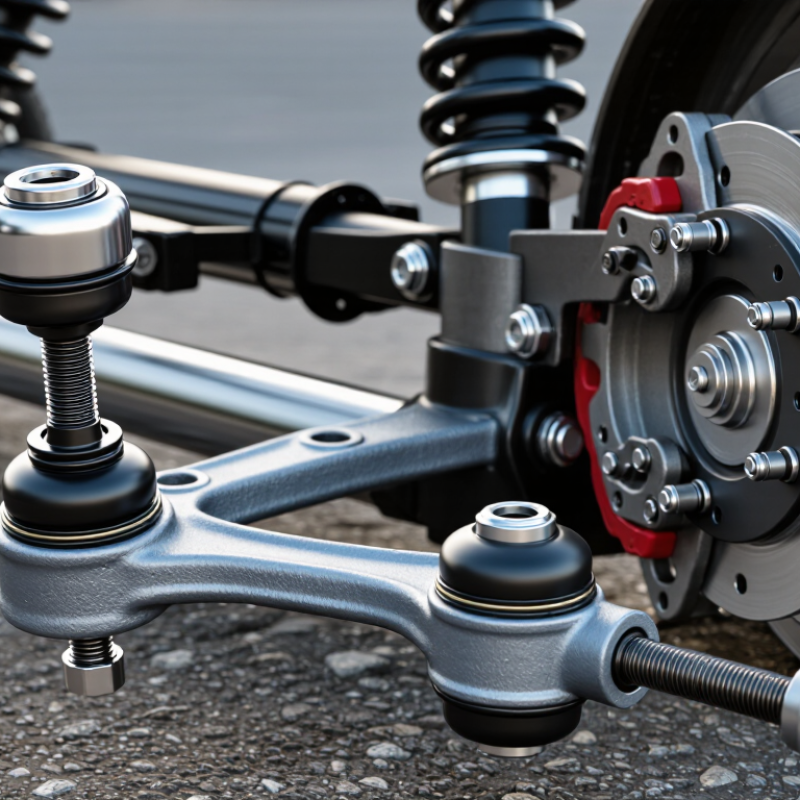
What an Arm Ball Joint Is
An arm ball joint is a compact, load-bearing pivot that connects a suspension control arm to the steering knuckle. Inside, a hardened steel ball stud moves within a bearing socket, usually protected by a flexible dust boot. This joint lets the wheel rise over a pothole while still turning left or right. It also helps keep the wheel positioned as the suspension travels. Small part. Important job.
The joint carries forces from braking, cornering, and road impacts. Its exact location and load vary with the suspension layout; some vehicles use upper and lower joints, while others use one joint with a different support arrangement. SAE J670 provides standardized terminology for vehicle dynamics, useful when describing how suspension and steering components interact. In practice, the joint’s condition depends on design, road exposure, lubrication, and wear—not mileage alone. S&P Global Mobility reported that the average age of U.S. light vehicles reached 12.6 years in 2024. Older vehicles may deserve closer inspection, but age by itself does not prove a joint is failing. A torn boot, looseness, or clunking can raise concern; diagnosis should follow the vehicle maker’s service procedure. I’d be cautious about judging it by sound alone. That can mislead.
What Is an Arm Ball Joint and What Types Are Available?
An arm ball joint is a pivot that connects a suspension control arm to the steering knuckle. Its ball-and-socket design allows the suspension to move while the wheel steers.
Typical ball-joint count per front suspension corner: A MacPherson-strut layout commonly uses one lower ball joint; a double-wishbone layout commonly uses an upper and a lower ball joint. Multi-link designs vary, so the count shown is an example rather than a universal specification. Ball joints are also described by position (upper or lower), role (load-carrying or follower), and attachment method (such as press-in or bolt-in).
Main Components and How the Joint Works
A control arm ball joint connects the suspension arm to the steering knuckle. Its main parts are a tapered ball stud, a bearing surface, a socket, a housing, and a protective boot. The stud’s threaded end secures to the knuckle, while the housing attaches to the arm. Inside, the rounded stud sits in the socket and can pivot in several directions. This movement lets the wheel rise over a bump while still turning with the steering system.
The joint carries vehicle weight and absorbs repeated impacts. A flexible rubber or polymer boot helps keep grit and water away from the bearing surfaces. Some joints are sealed for their service life; others have a grease fitting and require lubrication according to service guidance. That small boot matters. If it splits, contamination can accelerate wear, though the damage may not be visible from outside. Wear is gradual. A technician checks for looseness, damaged boots, and abnormal movement using the vehicle’s specified inspection method. A faint clunk alone does not confirm a failed joint; similar noises can come from other suspension parts. When checking one, the suspension position matters, so an informal shake test can miss play or suggest it where none exists.
Common Types of Arm Ball Joints
Common arm ball joints fall into several categories, and the labels describe different things. By function, a load-carrying joint supports suspension load, while a follower joint mainly guides steering-knuckle movement. On many short-long-arm suspensions, the lower joint carries more load; layouts vary, so check the service information. Small, but critical. By fitment, joints may be pressed into the control arm, bolted on, or integrated into it. Some are sealed, while serviceable designs have a grease fitting and require specified lubricant. These categories can overlap: a joint may be load-carrying and sealed, for example.
S&P Global Mobility reported that the average age of U.S. light vehicles reached 12.6 years in 2024. This fleet-age figure is not a ball-joint failure rate, but it underscores why wear checks matter. During inspection, look for a torn dust boot, grease leakage, looseness, or a dull knock over bumps. A boot can split before obvious play appears. Technicians measure joint movement against the vehicle maker’s specification, because acceptable play differs by design. Do not diagnose from noise alone; bushings and links can sound similar. I would also avoid assuming every upper joint is merely a follower. That shortcut can mislead.
Materials and Design Differences
An arm ball joint connects a control arm to the steering knuckle, allowing the wheel to move with the suspension and turn. Its materials affect strength, weight, corrosion resistance, and wear. The ball stud is commonly made from hardened steel because it must tolerate repeated loads and movement. The housing may use forged or cast steel, while some designs use aluminum to reduce weight. Lighter does not always mean better; the surrounding suspension design matters too.
Inside the joint, a bearing liner supports the polished ball stud. Depending on the design, this liner may be polymer or metal-backed. Polymer liners can operate quietly and need little routine attention, but heat and contamination still affect service life. A greaseable joint usually has a fitting for fresh lubricant, while a sealed design relies on grease installed during manufacture. Small details matter. A damaged rubber boot can let grit and water enter, accelerating wear even when the main parts are strong.
Design also varies by how the joint attaches to the control arm. Some are pressed into place; others bolt on or come integrated with the arm. These options influence replacement work and inspection access. There is no universal best combination: a lighter housing may suit one vehicle, while a robust steel assembly may better handle heavier loads. Without checking the vehicle’s specifications, material alone is a poor guide.
Typical Uses in Suspension Systems
In a suspension system, an arm ball joint links a control arm to the steering knuckle. It lets the wheel move up and down while still turning left or right. A steel stud pivots inside the joint, while a flexible dust boot helps keep out grit and moisture. Small part. Big workload. Depending on the suspension design, a vehicle may use upper and lower joints or only a lower one. The joint may carry substantial loads or mainly guide movement; its exact role depends on the layout.
On a rough road, the joint follows wheel travel as the control arm swings. During cornering, it lets the knuckle change direction without binding. In double-wishbone suspension, upper and lower joints help locate the knuckle. In many MacPherson strut layouts, a lower ball joint works with the strut above. That distinction is easy to miss. A worn joint may cause looseness, knocking, or uneven tire wear, but these signs can have other causes. Inspection should check for play and boot damage, using the specified test method for that vehicle. A visual check alone may miss early wear, so noise is not proof.
What Is an Arm Ball Joint and What Types Are Available? — Typical Uses in Suspension Systems
| Ball Joint Type | How It Works | Typical Suspension Position | Typical Use | Key Consideration |
| Load-carrying ball joint | Supports suspension loads while allowing the steering knuckle to pivot as the wheels steer and move vertically. | Often found at the lower control arm in suspensions where the coil spring or other major load acts through that arm. | Common in double-wishbone and other independent suspension layouts. | Its load role depends on the suspension design; it is not always the lower joint that carries the load. |
| Follower (non-load-carrying) ball joint | Guides the knuckle through suspension and steering movement but is not designed to support the primary spring load. | Often used at the upper control arm, depending on the vehicle’s suspension layout. | Common in double-wishbone systems paired with a load-carrying joint elsewhere. | It still experiences operating forces and wear, even though it does not carry the primary suspension load. |
| Press-in replacement joint | Fits into a machined opening in the control arm and is retained by an interference fit, a clip, or both, depending on the design. | Upper or lower control arm, where the arm is designed to accept a separately replaceable joint. | Serviceable suspension assemblies that allow the joint to be replaced without replacing the entire control arm. | Requires the correct tools and installation procedure to avoid damaging the joint or control arm. |
| Bolt-on ball joint | Attaches to the control arm with bolts or studs rather than being pressed into it. | At a control-arm mounting face designed for a bolted joint. | Suspensions with a separately replaceable, mechanically fastened joint. | Fastener condition and tightening specifications are important for secure installation. |
| Rivet-mounted ball joint | Factory-mounted to the control arm with rivets; replacement joints may use bolts after the original rivets are removed. | Commonly found on some original-equipment control-arm assemblies. | Applications where the joint is designed to be serviced separately from the arm. | Rivet removal and replacement require care; some designs instead call for replacing the complete arm. |
| Integrated or non-serviceable joint | Built into the control-arm assembly rather than supplied as a separate service part. | Upper or lower control arm, as specified by the suspension design. | Assemblies intended to be serviced by replacing the control arm when the joint wears. | Follow the vehicle’s service procedure; a separate joint replacement may not be approved for that design. |
What it does: An arm ball joint connects a control arm to the steering knuckle. Its ball-and-socket construction allows angular movement as the suspension travels and the wheels steer. The joint’s load-carrying role and replacement method vary by vehicle and suspension design.