
Choosing the best Solids Control Agitator in China requires more than comparing price tags or motor power. In drilling-fluid systems, an agitator must keep weighted mud moving, limit sediment buildup, and support stable solids-control performance. A suitable model should match tank dimensions, fluid viscosity, density, temperature, and operating conditions. Small details matter. Shaft length, impeller design, sealing quality, gearbox strength, and motor protection can affect daily reliability.
This guide examines Chinese agitator suppliers through practical and technical criteria. It considers material quality, manufacturing consistency, mixing efficiency, energy use, maintenance access, documentation, and after-sales support. Experienced drilling teams often inspect vibration, noise, seal leakage, and sediment patterns during commissioning. These observations can reveal problems that brochures do not show. A strong supplier should provide clear specifications, test records, installation guidance, and responsive technical service. Certifications are useful, but they should support real performance evidence.
There is no universal winner.
The “best” choice depends on the application. A compact tank may need a different impeller than a large active system. Highly weighted mud can expose weak gearboxes quickly. That said, product selection is not always perfectly objective. Field conditions change, operators have different priorities, and published performance figures may require verification. This article therefore compares practical strengths and limitations instead of making an unsupported absolute claim. It aims to help drilling contractors, equipment buyers, and maintenance managers make a more reliable decision when evaluating China’s Solids Control Agitator market.
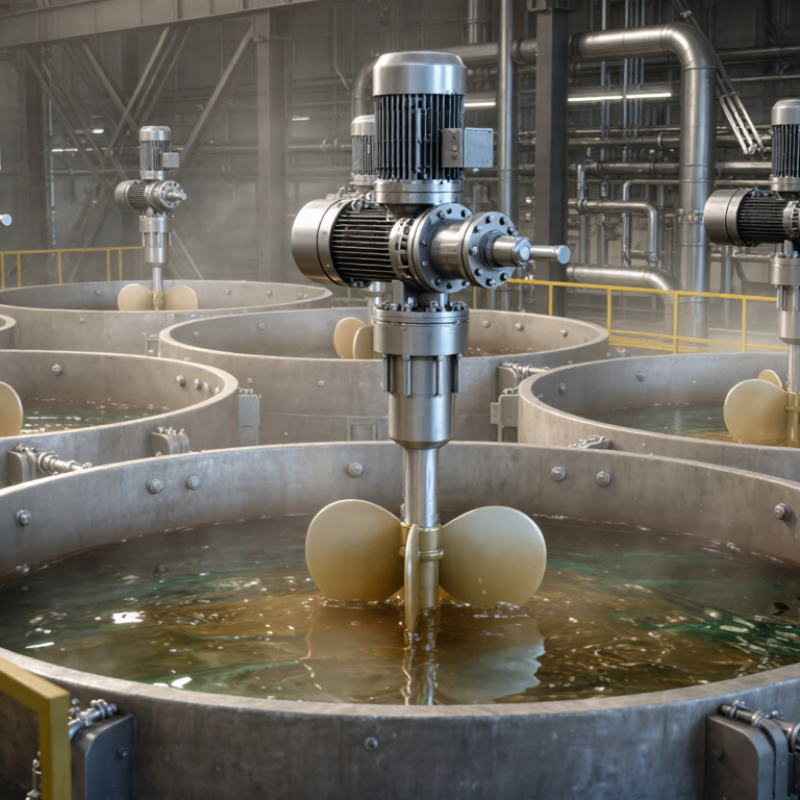
A solids control agitator is a mechanical mixer installed inside a drilling-fluid tank. Its impeller keeps barite, cuttings, and weighting materials suspended. Without movement, heavy particles settle quickly near the tank bottom. This creates dead zones, inaccurate mud density, and difficult transfers.
The right agitator in China depends on tank volume, mud viscosity, solids loading, and operating temperature. For many drilling systems, a low-speed, high-torque unit provides steadier circulation than a fast propeller. It should produce full-tank movement without excessive air entrainment.
A practical design often includes adjustable blades, sealed bearings, corrosion-resistant wetted parts, and simple maintenance access. Small details matter.
MarketsandMarkets’ 2024 Drilling Waste Management Market report estimates the sector will grow from about USD 6.7 billion in 2023 to USD 9.0 billion by 2028. IEA’s Oil 2024 report also projects global oil demand to rise by roughly 3.2 million barrels per day by 2030. These figures suggest continued pressure on drilling efficiency and fluid control. However, market growth does not make one agitator universally best. I would not specify equipment from catalog data alone. Field testing is still necessary. A unit may look efficient but leave settled solids behind. Operators should check mixing patterns, motor load, noise, and sediment depth during actual circulation.
A solids control agitator keeps drilling fluid moving inside tanks. Its impeller creates axial or radial flow, preventing barite, sand, and drilled cuttings from settling. The motor transfers torque through a shaft, while carefully selected blades produce circulation with limited turbulence. Excessive turbulence can damage fluid properties. That detail is often underestimated.
API RP 13B-1 emphasizes consistent drilling-fluid testing, including density, rheology, and solids evaluation. These measurements help engineers confirm whether agitation is maintaining uniform fluid quality. Field design practices commonly target full tank circulation within roughly 30 to 60 minutes, depending on tank volume, fluid viscosity, and solids loading. A 2024 industry market report also identifies automation and energy efficiency as major equipment priorities. However, the “best” agitator is not always the largest one. A poorly matched motor can waste power and still leave dead zones.
Tips: Check viscosity before selecting impeller speed. Inspect the tank corners, where settled solids often hide. Compare power consumption during loaded operation, not only during factory testing. Keep a simple record of density readings at different tank levels. If readings vary noticeably, the system may need better circulation or repositioning. Perfect mixing is difficult in real tanks. Temperature changes, worn blades, and unexpected solids can alter performance. API guidance helps, but field verification remains necessary.
A high-quality solids control agitator in China must manage real drilling-fluid stress, not merely rotate inside a tank. A 2024 MarketsandMarkets report valued the global drilling fluids market at approximately USD 8 billion. That scale shows why reliable mixing equipment matters. Poor agitation allows barite to settle, increases mud waste, and creates unstable density readings.
Field engineers should examine impeller design, shaft rigidity, motor efficiency, and sealing performance. The agitator should keep solids suspended during long circulation pauses. API RP 13C supports consistent solids-control evaluation, although it does not define every agitator specification. A suitable unit should also withstand vibration, abrasive particles, and frequent washdowns. IP-rated electrical protection is important in wet processing areas. Noise and heat deserve attention, too. They are often ignored during purchasing. That is a mistake.
Tips: Ask for a factory performance test. Check power consumption at the required tank volume. Request vibration data, seal-life records, and material certificates. Compare actual torque, not only motor horsepower. An experienced Chinese supplier should explain the test method clearly. If the explanation sounds perfect, inspect it more carefully. A small design compromise may appear after months of continuous operation. Tank geometry also matters. Even an excellent agitator can perform poorly when its mounting height or impeller clearance is wrong. Manufacturers should provide drawings before production. End users should verify them on site.
Which Features Define a High-Quality Agitator in China?
| Selection Criterion | Recommended Technical Range | Alternative Configuration | Quality Indicator for a High-Performance Agitator |
|---|---|---|---|
| Primary Application | Drilling-fluid, mud-treatment, and solids-suspension tanks | Wastewater, mineral slurry, or industrial process tanks after process verification | The agitator is selected according to tank geometry, fluid density, viscosity, solids loading, and required suspension performance rather than motor power alone. |
| Agitator Type | Top-entry agitator with a vertical shaft and axial-flow impeller | Side-entry agitator for large tanks or applications with limited top access | The configuration provides uniform circulation throughout the tank and minimizes dead zones near corners, the bottom, and the tank wall. |
| Typical Motor Power | Approximately 5.5–30 kW for many medium-sized mud tanks | Higher power may be required for large tanks, high-density fluids, or heavy solids loading | The motor is sized using torque, fluid properties, impeller diameter, speed, and service factor calculations, with sufficient starting torque. |
| Operating Speed | Approximately 30–120 rpm for large-diameter, low-shear mixing | Higher speeds may be used for smaller impellers or lower-viscosity fluids | The selected speed maintains solids suspension without creating excessive air entrainment, foam, vortexing, or unnecessary shear. |
| Impeller Design | Large-diameter axial-flow impeller, commonly with three or four blades | Pitched-blade, hydrofoil, or other slurry-suspension impellers based on process testing | The impeller generates strong bottom-to-top circulation and provides effective pumping capacity at moderate power consumption. |
| Tank Volume Coverage | Commonly designed for tanks of approximately 20–100 m³ per agitator, subject to engineering calculation | Multiple agitators for long, wide, or compartmentalized tanks | The number and position of agitators are matched to tank length, width, liquid depth, baffles, and the required uniformity of solids distribution. |
| Fluid Density | Often engineered for drilling fluids around 1.05–2.30 g/cm³ | Higher-density slurry service requires revised torque, shaft, bearing, and motor calculations | The design documentation states the maximum fluid density and confirms that the drive system can handle the corresponding absorbed power and torque. |
| Fluid Viscosity | Suitable for low- to medium-viscosity drilling fluids, with verification for high-yield or gelled mud | High-viscosity service may require a larger impeller, lower speed, increased torque, or multiple mixing levels | Performance is validated under realistic rheology, including yield stress and gel strength, rather than under water-only conditions. |
| Solids Handling | Continuous suspension of weighting materials, drilled solids, and fine-to-medium particles | Abrasion-resistant components for higher concentrations of sand or coarse solids | The wetted parts resist erosion, the impeller does not easily clog, and the agitator prevents sediment buildup during normal operation. |
| Shaft Construction | Rigid steel shaft with adequate diameter, concentricity, and dynamic balance | Stainless or specially coated shaft for corrosive fluids | The shaft has low runout, sufficient fatigue strength, reliable coupling alignment, and minimal vibration throughout the operating range. |
| Wetted Materials | Carbon steel with suitable coating or stainless steel selected for fluid chemistry | Wear-resistant alloys or replaceable wear components for abrasive slurry | Material selection considers chloride content, pH, corrosion risk, abrasion, temperature, and cleaning chemicals. |
| Mechanical Seal and Bearing | Industrial-duty seal and sealed or protected bearings located outside the process zone where practical | Packed gland arrangements for selected non-hazardous applications | The seal prevents fluid leakage, bearings are protected from mud ingress, and routine replacement can be completed without major disassembly. |
| Gearbox and Drive | Helical, bevel-helical, or other industrial gearbox with adequate service factor | Direct drive where speed, torque, and installation constraints permit | The gearbox is rated for continuous duty, has effective lubrication, low backlash, thermal capacity, and accessible inspection points. |
| Motor Protection | Industrial motor with suitable enclosure, overload protection, and thermal protection | Explosion-protected motor for classified hazardous areas after site assessment | Electrical protection matches the site classification, supply voltage, ambient temperature, duty cycle, and applicable Chinese or international requirements. |
| Speed Control | Variable-frequency drive for adjustable speed and soft starting | Fixed-speed operation where process conditions are stable and well defined | Speed control allows operators to adapt mixing intensity to changing density, viscosity, solids loading, and tank level. |
| Vibration and Noise | Low-vibration operation with properly aligned shaft, balanced impeller, and rigid mounting frame | Additional structural reinforcement for elevated platforms or long shafts | Factory testing includes vibration, rotation direction, current draw, leakage, and abnormal noise checks under defined conditions. |
| Maintenance Design | Accessible coupling, seal, bearing, gearbox, and impeller inspection points | Quick-change wear parts for abrasive or high-cycle service | Routine lubrication, seal replacement, alignment checks, and impeller inspection can be completed with minimal downtime. |
| Testing and Documentation | Technical drawings, motor data, material certificates, test records, and operating instructions | Performance testing with representative mud or slurry when the application is critical | The supplier provides traceable quality records, clear operating limits, spare-parts information, and measurable acceptance criteria. |
| Best Overall Selection Principle | A low-speed, high-flow, axial-flow agitator correctly matched to the tank and drilling-fluid properties | A customized multi-impeller or multi-unit arrangement for deep, large, or high-solids tanks | The best agitator is the one that maintains uniform solids suspension with reliable operation, reasonable energy consumption, low maintenance demand, and verified safety compliance. |
Comparing Chinese solids control agitator manufacturers requires more than checking motor power or purchase price. Start with the operating conditions. Ask for data on tank volume, drilling fluid density, viscosity, impeller diameter, rotation speed, and motor efficiency. A suitable agitator should maintain consistent suspension without creating excessive turbulence. Request drawings, material specifications, inspection records, and performance test results. These documents reveal how carefully the manufacturer controls production.
Experience matters during evaluation. Examine how the agitator performs after continuous operation, not only during a factory demonstration. Check the gearbox temperature, shaft vibration, sealing condition, and noise level after several hours. Ask whether the manufacturer can adjust the impeller for different tank depths. Clear answers often show stronger engineering knowledge. However, no comparison is perfect. Laboratory data may not match field conditions, especially when fluid properties change quickly. I would also inspect previous project references, although references can be incomplete or selectively presented. That small weakness deserves attention.
Tips: Compare identical specifications before comparing prices. Confirm motor certification, spare-part availability, warranty terms, and response time. Ask for a video of a load test, but do not treat video evidence as final proof. A site visit or independent inspection is more reliable. Keep every technical promise in writing.
What Is the Best Solids Control Agitator in China?
Choosing the best solids control agitator starts with the material, not the catalogue. Identify particle size, density, concentration, and settling speed before comparing equipment. A heavy barite slurry needs stronger torque than a light water-based fluid. High viscosity also changes the required impeller design and motor capacity. Start with the solids.
Tank geometry matters just as much. Check diameter, liquid height, bottom shape, and internal obstacles. A poorly positioned agitator can leave stagnant zones beneath the impeller. Adjustable speed helps operators balance suspension and shear. Excessive speed may damage sensitive additives or waste electricity. Do not guess. Request mixing calculations based on actual operating conditions, not laboratory water tests alone.
Reliable selection also depends on construction and maintenance. Review shaft stiffness, bearing protection, seal design, and wetted material compatibility. Ask for test records, performance data, inspection procedures, and spare-part availability. A supplier should explain torque margins and overload protection clearly. This is where many purchasing decisions become too optimistic. A larger motor is not always a better solution. It may increase heat, vibration, and operating cost without improving suspension. Field feedback, trial testing, and documented service experience should guide the final choice. Even experienced engineers can overlook changing solids concentration during a shift. Build that variation into the specification.
Preliminary agitator selection should consider solids loading, fluid viscosity, tank geometry, and the required suspension level. Typical power-density ranges for solids suspension are approximately 100–250 W/m³ for low-solids service, 250–500 W/m³ for medium-solids service, and 500–1,000 W/m³ for high-solids service. Axial-flow impellers are commonly preferred because they provide strong top-to-bottom circulation with lower shear and efficient power consumption. Final sizing should be confirmed using tank volume, solids concentration, settling velocity, and motor service-factor calculations.
Indicative engineering reference ranges for preliminary system design; actual requirements vary by fluid and equipment configuration.
