Choosing the best UPS backup for global businesses is not a simple product comparison. It is a resilience decision shaped by location, load, budget, and risk.
Paul Lin, a data center researcher at Schneider Electric, has said, “A UPS is the last line of defense between unstable power and critical equipment.” That sentence captures the real purpose of this technology. A UPS backup should protect servers, medical systems, network devices, and industrial controls during voltage dips, outages, and frequency changes. It should also provide enough runtime for a controlled shutdown or generator transfer.
Global operations make the decision more complicated. A warehouse in Singapore may face heat and humidity, while an office in Frankfurt may prioritize compact installation and low maintenance. A remote site in Kenya may need longer battery autonomy and stronger monitoring. Double-conversion systems can deliver cleaner power, but they may increase energy use and operating costs. Lithium-ion batteries can reduce space requirements, yet their purchase price may challenge smaller facilities. VRLA batteries remain practical in many environments, though they demand closer replacement planning.
There is no universal winner. That is the uncomfortable part. A high-capacity UPS backup can still fail when batteries are ignored, firmware is outdated, or staff cannot respond quickly. Reliable protection requires testing, documented maintenance, remote alerts, and trained technicians. Businesses should compare total lifecycle cost, service availability, environmental conditions, and expansion plans. The best solution is not always the newest one. It is the system that performs predictably when the lights go out.
Global business operations depend on stable electricity across offices, warehouses, cloud gateways, and production sites. A UPS backup system protects these locations during voltage drops, blackouts, and generator transfer delays. It also filters unstable power before sensitive servers receive it.
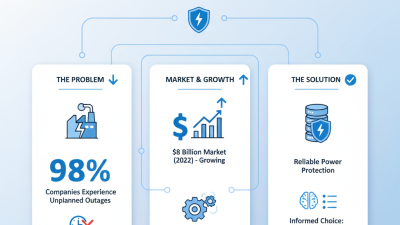
The Uptime Institute’s 2024 Global Data Center Survey reported that more than half of respondents experienced an outage during the previous three years. Power problems remain a major contributor. For global companies, the best UPS backup is not simply the largest unit. It should match local grid quality, equipment load, required runtime, and recovery procedures. Double-conversion systems provide stronger power conditioning. Modular systems can expand as workloads grow. Battery monitoring is equally important, especially when sites operate across different climates and maintenance standards.
Tips: Measure actual peak load, not the average reading. Keep critical equipment on separate circuits. Test battery autonomy under realistic conditions. Confirm service coverage and replacement schedules in every operating region. Document the shutdown sequence.
In practice, many companies purchase UPS capacity but neglect fuel logistics, cooling, and remote alerts. That is an avoidable weakness. The Ponemon Institute has repeatedly linked unplanned data-center outages with substantial financial losses, sometimes reaching hundreds of thousands of dollars per incident. However, cost estimates vary widely by sector and interruption length. A resilient design therefore combines UPS protection, backup generation, network monitoring, and trained local staff. It may not be perfect. It should be measurable, tested, and improved after every failure or near miss.
What Is the Best UPS Backup for Global Businesses?
The best international UPS solution depends on location, load, and operating risk. A unit designed for a data center may not suit a warehouse in a hot, unstable grid environment. Check local voltage, frequency, plug standards, and electrical regulations before comparing capacity. International certifications and documented test results also matter. They help engineering teams verify safety across regions.
Start with the actual load, not the equipment label. Measure servers, network devices, cooling systems, and future expansion. A 100 kVA load should not run beside a 100 kVA UPS with no reserve. That leaves little room for growth. Online double-conversion technology can provide stable power during voltage dips, frequency changes, and generator transitions. Battery runtime needs practical testing. Fifteen minutes may protect a controlled shutdown, but it may not cover a long utility failure. Temperature, humidity, altitude, and battery room conditions can change performance.
Service capability is equally important for global operations. Review response times, replacement battery availability, remote monitoring, and technician coverage in each country. Cybersecurity deserves attention when the UPS connects to a corporate network. Use access controls, secure updates, and separate monitoring channels. Total cost includes energy losses, maintenance, battery replacement, transport, and disposal requirements. A cheaper purchase can become expensive after several years. A neat spreadsheet can still mislead. Recheck assumptions with site measurements, outage records, and local engineers. Even experienced teams sometimes overestimate battery life or underestimate installation constraints. That uncomfortable review often prevents a costly interruption.
What Is the Best UPS Backup for Global Businesses?
The best UPS depends on the facility’s load, power quality, and required runtime. Standby UPS units suit basic office equipment with low outage risk. They switch to battery power during failures, but transfer time can affect sensitive devices. Line-interactive systems add automatic voltage regulation. They are practical for regional offices and network closets. Online double-conversion UPS systems provide continuous power conditioning. They remove most voltage disturbances before electricity reaches critical servers.
Battery technology also changes performance. Valve-regulated lead-acid batteries usually cost less and remain widely serviceable. Lithium-ion batteries occupy less space and often support more charge cycles. However, heat can shorten battery life, especially in poorly cooled rooms. Modular UPS designs allow capacity to grow with demand. That flexibility matters when a business adds racks, offices, or production equipment. Real performance still depends on installation quality, not the brochure.
Global businesses should compare efficiency, transfer time, monitoring, voltage compatibility, and maintenance access. A unit designed for one electrical standard may not fit another site. Practical assessments should include generators, network equipment, and unexpected load growth. Runtime estimates can look precise. They are not. Battery age, temperature, and load imbalance can reduce actual backup time. During site reviews, technicians should test alarms, bypass operation, battery condition, and remote notifications under controlled conditions. A five-minute test may reveal more than a long specification sheet.
| Comparison Dimension | Standby / Offline UPS | Line-Interactive UPS | Online Double-Conversion UPS | Modular Online UPS | Rotary UPS |
|---|---|---|---|---|---|
| Core Operating Principle | Supplies utility power during normal conditions and switches to battery power when an outage or severe voltage problem is detected. | Uses a voltage-regulating autotransformer in addition to battery backup, reducing the need to switch to battery during moderate voltage fluctuations. | Continuously converts incoming AC power to DC and then back to AC, isolating connected equipment from most utility disturbances. | Uses multiple hot-swappable power modules in an online double-conversion architecture, allowing capacity and redundancy to be adjusted as demand changes. | Uses a motor-generator, energy-storage system, or flywheel-based rotating machine to provide conditioned or uninterrupted power, commonly with a standby generator for extended outages. |
| Typical Power Range | Approximately 300 VA to 1.5 kVA. | Approximately 500 VA to 5 kVA. | Approximately 1 kVA to several megavolt-amperes, depending on the system configuration. | Typically several kVA to multi-megavolt-ampere installations using parallel modules. | Typically hundreds of kVA to multi-megavolt-ampere installations. |
| Voltage Transfer Time | Usually several milliseconds; sensitive equipment should be checked for compatibility. | Usually several milliseconds; the transfer is generally suitable for most business IT equipment. | No transfer during normal disturbances Load remains supplied by the inverter. |
No transfer during normal disturbances Redundant modules can support continuity during module failure or replacement. |
Can provide continuous output when correctly configured; performance depends on the rotating system and energy-storage design. |
| Power-Quality Protection | Basic Protects mainly against outages and major voltage events; filtering capability is limited. |
Moderate Provides voltage regulation and basic filtering, but does not fully isolate the load from the utility waveform. |
High Provides strong protection against sags, surges, frequency variations, harmonics, and electrical noise when properly specified. |
High Provides online conditioning with additional redundancy and fault-tolerance options. |
High Can deliver stable power and high fault-current capability, especially in large industrial or data-center systems. |
| Typical Operating Efficiency | Approximately 95% to 99% in normal operating mode. | Approximately 95% to 98% in normal operating mode. | Approximately 90% to 97% in standard double-conversion mode; high-efficiency operating modes may exceed this range but can provide different protection characteristics. | Approximately 94% to 99% depending on load level, module design, and operating mode. | Often approximately 95% to 99%, depending on the machine, load profile, and energy-storage arrangement. |
| Output Waveform | May use a stepped approximation or a sine-wave inverter; the specification must be checked for active power-factor-correction loads. | May provide a stepped approximation or a pure sine wave; pure sine-wave output is preferable for servers and networking equipment. | Normally provides a regulated sine-wave output with controlled voltage and frequency. | Normally provides a regulated sine-wave output with controlled voltage and frequency. | Provides a regulated generator output; waveform quality depends on the alternator, controls, and system design. |
| Battery Runtime Characteristics | Usually designed for short runtime, commonly several minutes at full load, with limited expansion. | Usually provides several minutes of runtime at full load and may support external battery packs on selected models. | Can support external battery cabinets and engineered battery rooms for longer runtime requirements. | Supports scalable battery cabinets or strings and can be configured for longer autonomy and maintenance segmentation. | Flywheel systems typically provide short-duration ride-through, often seconds to a few minutes; generators are normally required for extended outages. |
| Scalability and Redundancy | Limited Generally installed as individual units with little capacity expansion. |
Moderate Some models support external batteries, but parallel expansion is less common. |
Strong Parallel operation and N+1 or distributed-redundancy designs are widely available. |
Very strong Capacity can be increased by adding modules, while N+1 redundancy can be maintained if properly sized. |
Strong Suitable for large centralized systems, but expansion normally requires detailed mechanical and electrical planning. |
| Maintenance and Serviceability | Low maintenance complexity; batteries are usually the primary service item. | Moderate maintenance complexity; battery replacement and voltage-regulation components require periodic inspection. | Requires scheduled battery, cooling, capacitor, fan, and bypass-system maintenance; preventive service is important for continuous operation. | Hot-swappable modules can reduce maintenance downtime, but battery systems, controls, and bypass equipment still require planned service. | Requires specialized mechanical and electrical maintenance for bearings, motors, generators, flywheels, controls, and energy-storage components. |
| Space and Environmental Requirements | Compact and generally suitable for office or branch locations. | Compact to moderately sized; suitable for offices, network closets, and small server rooms. | Requires dedicated electrical space, ventilation, battery clearance, and appropriate heat-management capacity. | Uses floor space efficiently at higher capacities, but requires planning for modules, batteries, bypass equipment, and service access. | Requires substantial floor space, structural planning, ventilation, and sometimes acoustic or mechanical isolation. |
| Noise and Heat Output | Generally low noise and low heat output during normal operation. | Generally low to moderate noise and heat output. | Moderate to high heat output and fan noise, particularly at high load or low efficiency. | Moderate heat output; modular designs can improve efficiency at partial load, subject to the selected operating mode. | May generate mechanical noise and vibration; cooling and acoustic treatment may be required. |
| Best-Fit Business Applications | Individual workstations, point-of-sale terminals, small network devices, and non-critical office electronics. | Branch offices, network closets, small servers, telecommunications equipment, and regional facilities with moderate power-quality needs. | Data centers, healthcare systems, industrial controls, telecommunications hubs, financial operations, and other critical loads. | Large data centers, colocation facilities, cloud infrastructure, and enterprises requiring incremental growth and high availability. | Large data centers, industrial plants, airports, utilities, and facilities requiring high-capacity ride-through and strong short-circuit performance. |
| Global Deployment Considerations | Simple to deploy, but local voltage, frequency, plug, certification, and battery-replacement requirements must be verified in each country. | Well suited to distributed sites, provided the input voltage range, frequency tolerance, bypass behavior, and local service coverage are confirmed. | Best for standardized critical-power architectures; requires coordination with local electrical codes, grounding systems, generators, and service teams. | Supports standardized global architectures with flexible capacity, but spare modules, battery logistics, remote monitoring, and trained technicians should be planned regionally. | Appropriate for major centralized facilities; local engineering expertise, spare parts, mechanical service capability, and generator coordination are essential. |
| Relative Capital Cost | Lowest | Low to moderate | Moderate to high | High initial investment May reduce lifecycle cost through modular growth and serviceability. |
High Requires specialized infrastructure and installation. |
| Overall Suitability for Critical Global Operations | Suitable for low-criticality loads and edge devices. | Suitable for small and medium sites with moderate availability requirements. | Excellent Strong choice where power quality and continuity are priorities. |
Excellent Strong choice where scalability, redundancy, and lifecycle flexibility are required. |
Excellent for large facilities Best when high capacity, generator integration, and specialized maintenance resources are available. |

A global UPS strategy must protect operations across unstable grids, varied climates, and different service environments. Reliability starts with topology, not capacity alone. Online double-conversion systems provide continuous voltage and frequency regulation. N+1 redundancy allows maintenance without interrupting critical loads. Uptime Institute’s 2024 Annual Outage Analysis found that 54% of respondents reported outage costs above $100,000. About 20% exceeded $1 million. These figures make battery autonomy, bypass design, and monitoring practical financial decisions.
Scalability matters when offices, warehouses, and data rooms expand unevenly. Modular capacity can reduce stranded investment, although it may complicate coordination between power modules. A deployment team should check local voltage, frequency, temperature, battery transport rules, and replacement access.
The International Energy Agency’s Electricity 2024 report expects data-centre electricity demand to more than double by 2026. That pressure increases the value of efficient UPS operation and predictive maintenance.
Yet efficiency ratings alone can mislead. A system may perform well in a laboratory, but poorly in dusty or hot locations. Field commissioning still matters.
Tips: Map every critical load before purchasing. Keep spare batteries locally. Test transfer procedures quarterly. Use independent alarms. Review service response times, not only warranty length. Ask whether remote diagnostics remain available during network failure. Document lessons from every near miss. Small gaps often become expensive ones.
What Is the Best UPS Backup for Global Businesses?
Best Practices for UPS Installation, Monitoring, and Maintenance
A reliable UPS program begins before the equipment reaches the server room. Site surveys should verify load profiles, grounding, airflow, voltage, frequency, and local electrical codes. Global facilities also need compatible input ranges and qualified local technicians. IEC 62040 guidance supports structured testing and safety controls for UPS systems.
Installation errors often appear as small details. Loose terminals, blocked vents, and incorrect battery settings can create serious failures. Technicians should record torque values, cable routes, battery dates, and bypass procedures. Thermal imaging can reveal abnormal connections before they become outages. Uptime Institute’s Annual Outage Analysis reported that 54% of outages cost more than $100,000. That figure makes commissioning discipline difficult to ignore.
Monitoring should track load percentage, battery temperature, runtime, alarms, and transfer events. Alerts must reach someone who can act, not just a dashboard. Battery impedance testing and discharge tests should follow the manufacturer’s approved procedures and site risk plan. Preventive maintenance should include visual inspections, firmware reviews, cleaning, and controlled transfer tests. The Ponemon Institute has estimated average data-center outage costs near $9,000 per minute. Still, reports do not replace experience. I have seen well-maintained systems fail after overlooked configuration changes. That weakness deserves honest review during every maintenance cycle.