How to Choose the Right Power Backup Solution for Your Needs?
Choosing the right power backup solution is crucial in today's world. As Mark Whitaker, a power backup industry expert, states, "A reliable power backup can mean the difference between chaos and control." With unpredicted power outages becoming more frequent, understanding your options is essential.
When selecting a power backup, consider your specific needs. What devices do you want to keep running? For instance, a small portable generator may suffice for simple use. However, if reliable support for entire households or businesses is necessary, larger systems are required. Think about capacity and run time.
Many people overlook installation and maintenance. These factors can influence your overall satisfaction. Is the system easy to operate? Will it require frequent upkeep? Testing backup systems before a crisis is essential. This ensures that your power backup plan will hold up when needed most. Determining the right power backup solution involves careful thought. You'll often find it’s not as straightforward as anticipated.

Understanding Different Types of Power Backup Solutions Available Today
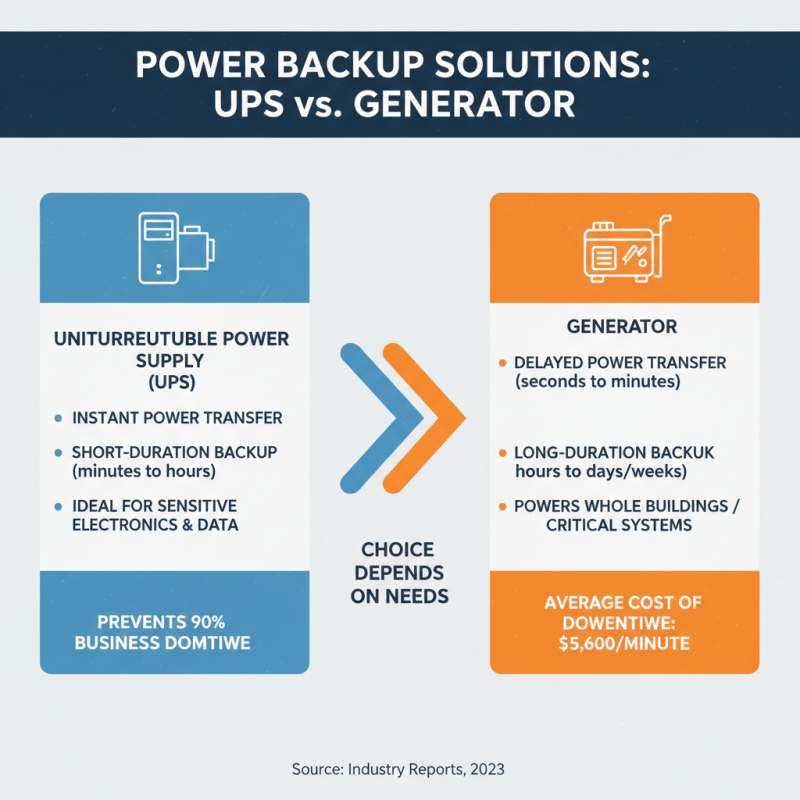
When considering power backup solutions, understanding the available options is crucial. There are primarily two types: uninterruptible power supplies (UPS) and generators. A UPS provides instant power, typically lasting from a few minutes to several hours. This can be vital for keeping sensitive electronics running during momentary outages. Statistics show that 90% of businesses experience downtime due to power issues. The average cost of this downtime can reach up to $5,600 per minute.
Generators, on the other hand, offer longer-term solutions. They generate power for an extended period, often for several hours or days. Data indicates that 20% of small businesses invest in generators to safeguard against outages. Yet, many may overlook maintenance. A neglected generator can fail when it's needed most. It's a common misconception that simply owning a generator ensures reliability.
Battery-powered solutions are also gaining traction. They are quieter and cleaner, though they often require regular charging. Reports reveal that battery storage markets are poised to grow by over 40% by 2025. However, not every home or business will benefit from battery systems, especially where energy demand is high. Evaluating specific needs helps in making informed decisions.
Assessing Your Power Needs: How to Calculate Energy Requirements
Assessing your power needs is crucial when choosing the right backup solution. Start by calculating your energy requirements. List the essential devices you need to power during an outage. Common items include refrigerators, lights, and electronics. Take note of their wattage. This will help you understand the total load.
To calculate your needs, use a simple formula. Multiply the wattage of each device by the hours you plan to run them. For instance, a 100-watt bulb running for 5 hours needs 500 watt-hours. Be aware that peak demands may vary. This means your total needs might fluctuate, depending on simultaneous usage.
Consider your energy habits too. Do you often work from home? Are there health-related items that need constant power? Reflect on these questions as they matter. Your lifestyle impacts power needs significantly. Sometimes small devices go unnoticed, but they add up. A meticulous approach helps avoid surprises down the line. Think critically about these aspects to secure a suitable power solution.
Key Features to Consider When Choosing a Power Backup System
Choosing the right power backup solution requires careful consideration of key features. Understanding your specific needs is essential. According to a report from Energy Insider, about 30% of homes experience power outages each year. Thus, the reliability of a backup system is crucial.
Battery capacity is a primary feature to assess. Systems should provide sufficient power for essential devices during an outage. A typical household requires around 3 kWh to operate critical appliances for 24 hours. Users must evaluate their daily energy consumption and select a power backup that meets these requirements.
Battery type is another critical factor. Lithium-ion batteries offer higher energy density and longer lifespans compared to lead-acid batteries. However, they can be pricier. Consider your budget and how long you plan to use the system.
Tip: Regularly test your backup system to ensure it functions properly. Many users forget this step, leading to failures during outages. It's an important but often overlooked part of maintenance.
Tip: Research total cost of ownership. Sometimes up-front costs can be deceiving. Long-term savings on maintenance and replacements matter in the end.
Power Backup Solutions Comparison
Evaluating Cost vs. Performance in Power Backup Solutions
Choosing the right power backup solution can be daunting. Cost and performance are often at odds. A low-cost option might save money upfront but could fail during a crisis. Reliability is key. Evaluate how often you rely on power. Are you in an area with frequent outages? Or do you use it sporadically?
Consider your specific needs. If you only need backup for essential devices, a simpler model may work. However, for businesses, a more robust solution is necessary. Think about the power output required and how long you need it to last. Balance initial costs with long-term performance. A cheaper model might need replacement sooner, increasing expenses over time.
Also, reflect on your storage capacity. Larger systems can handle more devices but also come with higher costs. Look into user reviews, but remember, experiences vary. Sometimes, what works for one person might not be suitable for you. Take your time to assess all options carefully. The right choice is crucial for peace of mind during outages.
Installation and Maintenance: Best Practices for Longevity and Efficiency
When it comes to power backup solutions, installation and maintenance are critical for optimal performance. A well-installed system ensures reliability. Take time to understand your backup requirements before setting up. Clear the space around the unit for ventilation. Proper placement can enhance efficiency.
Tip: Always read the installation manual carefully. It might save you from common mistakes. Connect all components securely. Loose connections can lead to failures. Regular checks on wiring and connectors are essential. This can help prevent potential issues down the road.
Routine maintenance plays a huge role in longevity. Clean the unit regularly to avoid dust buildup. This simple task can significantly improve efficiency. Monitor battery health periodically. Batteries degrade over time, and replacing them on schedule will ensure continuous power supply.
Tip: Keep a log of maintenance dates. This makes tracking easier. If something seems off, don’t ignore it. Small problems can grow if not addressed. Ultimately, investing time in careful installation and regular upkeep pays off in reliability.