
Choosing a Football Ball Launcher Machine in 2026 means matching the equipment to real training needs, not chasing the longest feature list. A goalkeeper working on low saves needs different delivery options from a striker practicing first touches. Ball speed, launch angle, feeding interval, and adjustment range all affect whether drills feel useful and repeatable. Small details matter. Can one coach move and set up the unit? Does it handle the ball sizes your team actually uses? These questions are easy to overlook when comparing product pages.
Specifications are a starting point, not proof of performance. Ask suppliers for clear operating instructions, warranty terms, maintenance guidance, and a live demonstration when possible. Watch how consistently the machine feeds balls, and check whether controls are easy to reach during a session. A short field trial may reveal more than a polished brochure. I would not claim one model suits every club; budgets, player levels, and coaching habits change the answer. Some published figures may also need confirmation under your own conditions. This guide outlines the practical features to compare, the questions worth asking, and the trade-offs between portability, capacity, and control. The aim is a well-informed choice that supports focused practice without adding needless complexity.
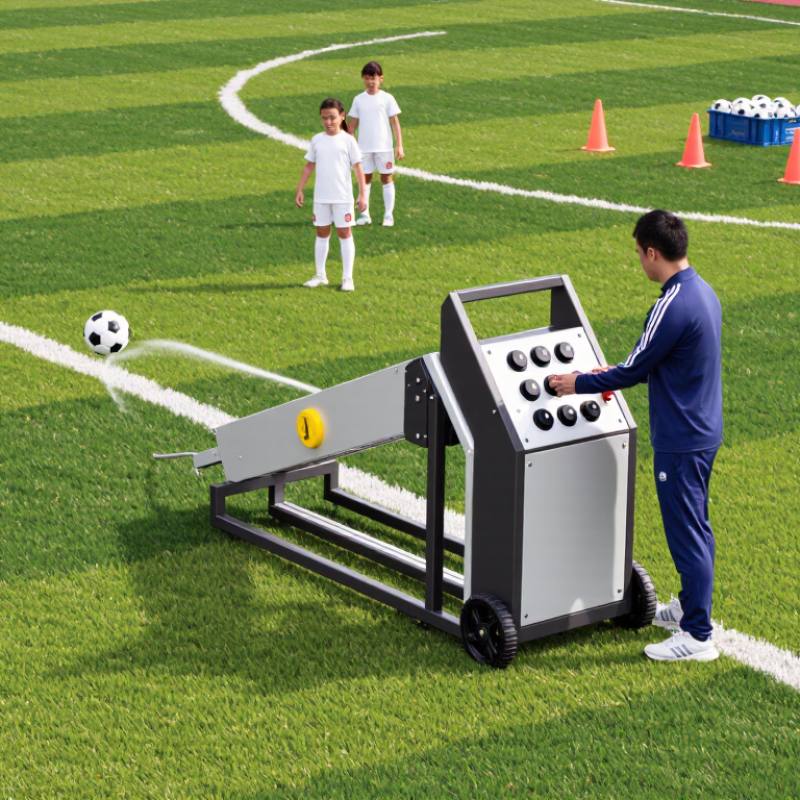
A football launcher should match the ball used in training, not just its advertised speed. IFAB’s Laws of the Game 2025/26, Law 2, specifies a Size 5 ball circumference of 68–70 cm and a starting weight of 410–450 g. That is a useful baseline when checking whether a machine’s feed system accepts match-size balls consistently. A ball can look standard yet feel different when its pressure or surface wear changes.
Define the drill before comparing machines. For passing practice, prioritize repeatable pace and a low, accurate trajectory. For goalkeeper work, adjustable height and spin matter more. Check how the launcher handles a slightly damp or scuffed ball, too, while following the machine’s operating instructions. Small differences matter. FIFA’s Quality Programme for Footballs describes laboratory checks of ball performance and durability; its testing approach is a useful reminder that ball consistency involves more than circumference.
Use the same approved Size 5 balls during setup and evaluation. Record the launch distance, pace setting, and ball pressure, then repeat the sequence. If shots drift, check the ball and feeder before raising the speed. It is tempting to blame the machine immediately. That is not always fair. Real sessions are messy, and one ball may behave differently from the next. A short trial with the team’s actual match balls can reveal that gap.
When choosing a football ball launcher in 2026, check the balls it can handle before comparing speed settings. IFAB match balls weigh 410–450 g and are inflated to 0.6–1.1 atm at sea level. That range matters. A launcher tuned for a lighter training ball may feed a regulation ball unevenly, especially when its wheels or rollers are worn. Check the machine’s stated ball-size and weight range, then test with the exact ball you plan to use. A quick test with one ball is useful, but it cannot represent every ball in a training bag.
Pressure changes how a ball rebounds from the launcher’s contact wheels. Use a reliable gauge, record the reading, and stay within the ball’s permitted range. A ball near the lower limit may feel softer and travel differently from one near the upper limit. Small differences count. Look for adjustable feed speed and a stable ball channel; these help you repeat short passes, driven balls, or higher deliveries. Still, pressure alone will not explain every inconsistent shot. Seam wear, moisture, and surface damage can also affect flight. It is easy to blame the machine too quickly. Check the ball first, then compare several launches from the same position.
A football ball launcher can look impressive in a showroom, but the test sheet tells you more. Compare launch speed at several settings, not only the maximum figure. Ask whether the speed was measured at the outlet or near the receiving point. A ball can lose pace in flight, especially over a longer drill distance. Check the test ball’s size, pressure, and condition; worn or underinflated balls can skew results.
Feed rate needs similar care. Find out how many balls the machine releases per minute, and whether that rate stays steady through a full hopper. A fast opening burst is not the same as a reliable training rhythm. That matters. For repeatability, look for a stated spread in speed and direction across repeated launches, rather than a single “average” result. Ask how many shots were tested and under what conditions. If the manufacturer provides no method, treat the numbers as a starting point, not proof. I would also compare data from the same distance and settings, though test conditions rarely match a real pitch perfectly. A simple trial with your own balls can reveal awkward pauses, drifting shots, or a feed rate that feels too demanding for the drill.
Use the rows below to compare manufacturer-published results under matching conditions. No machine-specific test results are shown here; request verified data rather than treating estimates or advertised maximums as test measurements.
| Comparison dimension | What to record | Comparable test method | Manufacturer data to request | How to interpret it |
|---|---|---|---|---|
| Launch speed | Speed at the ball exit, in km/h or mph | Use the same ball type, pressure, launch setting, and measurement distance. Report the measurement device and whether speed is measured at exit or downstream. | Tested speed at each setting; minimum and maximum; measurement method; test conditions | Compare tested values at settings you will actually use, not an unsupported “up to” figure. |
| Feed rate | Balls delivered per minute | Run a timed cycle with the same ball type and hopper load. Record actual delivered balls and any jams or missed feeds. | Measured balls per minute; hopper capacity; test duration; jam or misfeed count | A stated maximum feed rate is not directly comparable unless the test duration and loading conditions match. |
| Repeatability | Variation in speed and landing position across repeated shots | For a comparison protocol, record 30 consecutive shots per setting without changing the machine setup. Report the mean and standard deviation. | Number of shots; speed mean and standard deviation; landing-point spread; any excluded shots and reasons | Lower shot-to-shot variation indicates more consistent delivery under the stated test conditions. |
| Ball specification | Ball size, mass, condition, and inflation pressure | Use the same documented balls for each machine and record pressure before testing. | Ball model or construction, size, mass, pressure, and whether balls were new or used | As a reference, FIFA’s size 5 ball specifications give a circumference of 68–70 cm and a mass of 410–450 g at the start of the match. |
| Test conditions | Setup details needed to reproduce the results | Keep distance, elevation, feed setting, power source, and environment consistent between tests. | Test date; setup diagram; power supply; ambient conditions; calibration details | Results without test conditions may not be comparable across machines. |
| Evidence and reporting | Traceable records for each reported value | Request a dated test report, raw readings, instrument details, and the exact machine configuration. | Report or data sheet reference; test sample count; measurement uncertainty, if available | Prefer measured results with disclosed methods over estimates, demonstrations, or unqualified performance claims. |
The 30-shot procedure above is a suggested comparison protocol, not a universal industry standard. The ball reference is a published specification; it is not a launcher performance result.
Choose power around the drills you actually run, not the most impressive number on a specification sheet. For short passing work, consistent delivery at moderate speed may matter more than maximum range. For long balls or repeated high-speed shots, check whether the machine maintains its pace as the session continues. Ask how speed, feed rate, and ball type affect performance. A heavier ball can behave differently from a regulation match ball. Test with the balls your players use.
Portability affects setup time. Measure the route from storage to the field, including gates, steps, and uneven grass. Check wheel size, handle height, and whether one coach can load the unit safely. Then compare the duty cycle with your session plan: a machine used for brief drills needs different cooling capacity from one feeding balls continuously. Allow for pauses and follow the maker’s operating instructions. Heat builds up.
If possible, observe a full practice-length run before buying. Note how often the launcher needs attention, whether its output drifts, and how quickly it can be moved between stations. Specifications help, but they do not show every field problem. I would still leave room to revise the choice after a few sessions.
Match power, portability, and duty cycle to your training sessions.
The scores are a qualitative planning guide, not measured product specifications: 1 means low priority and 5 means high priority. Individual practice often favors portability, while team drills and high-volume sessions place more emphasis on power and sustained operation. Check a machine’s stated operating limits and rest requirements before purchase.
Safety deserves more than a sales-page claim. Check for a stable base, guarded moving parts, a clearly marked emergency stop, and a feed path that keeps hands away from the wheels. Ask how the unit behaves if a ball jams or power fails. In a school or club session, a loose cable or a wet patch near the machine can matter as much as its launch speed. FIFA Quality Programme requirements specify size-five balls at 68–70 cm in circumference and 410–450 g in weight. That gives you useful reference points when checking whether a launcher handles standard training balls consistently. FIFA’s ball tests do not certify launcher safety, though. Keep that distinction clear.
Warranty terms matter most when something actually breaks. Confirm the coverage period, which parts are excluded, and whether support can supply replacement wheels, fuses, or remote controls. Ask for a written maintenance schedule and realistic repair response times. A long warranty is less useful if routine servicing is difficult to arrange. Also check whether cleaning the feed wheels or replacing a worn belt affects coverage. Small details count. Before buying, request a sample inspection checklist and clarify who performs repairs. I would not assume every machine needs the same service interval; dust, damp storage, and frequent use can change wear rates. A clear support plan is more dependable than a vague promise of “easy maintenance.”
