How to Choose the Best Deep Cycle Car Battery for Your Needs
When it comes to powering various electrical systems in your vehicle, choosing the right deep cycle car battery can make all the difference. Unlike traditional batteries designed for short bursts of power, deep cycle car batteries are engineered to provide sustained energy over extended periods, making them ideal for applications such as RVs, boats, and other vehicles that rely on auxiliary power. Understanding the key features and specifications of deep cycle car batteries is essential for anyone looking to optimize their energy supply and ensure reliable performance in their automotive endeavors.
In this guide, we will explore the vital considerations to keep in mind when selecting the best deep cycle car battery to fit your specific needs. From assessing the capacity and discharge rates to understanding the different types available, this outline aims to arm you with the knowledge necessary to make an informed decision. Whether you're embarking on a weekend camping trip or relying on your vehicle's electrical systems for daily tasks, selecting the right battery is critical to ensuring you have the power needed when it matters most.
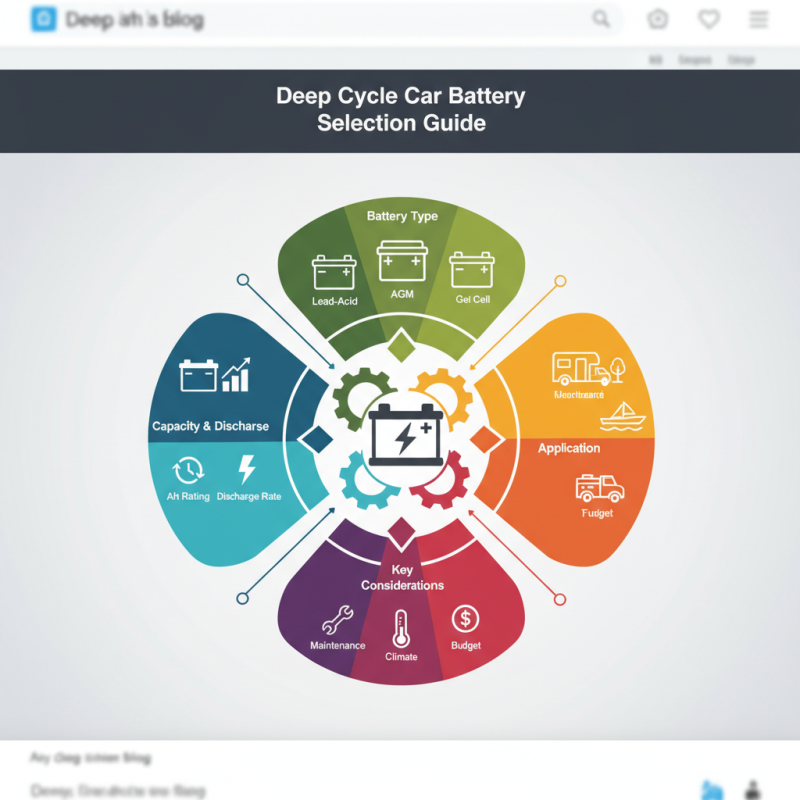
Understanding Deep Cycle Batteries: Definition and Uses
Deep cycle batteries are designed to provide a steady amount of power over an extended period, making them ideal for applications that require prolonged energy output. Unlike standard car batteries, which deliver quick bursts of energy to start an engine, deep cycle batteries can be discharged and recharged multiple times without suffering significant damage. This unique characteristic makes them suitable for RVs, boats, and renewable energy systems like solar setups, where consistent power is essential.
The primary applications of deep cycle batteries span various domains. For recreational vehicles, they power appliances and lights, ensuring that users can enjoy amenities while away from traditional power sources. In marine environments, they support trolling motors and other onboard electronics. Moreover, in off-grid solar systems, deep cycle batteries store the energy generated by solar panels for use during nighttime or cloudy days. Understanding these functionalities is crucial for anyone looking to select the right battery to meet specific energy needs, ensuring that the chosen battery aligns with their usage patterns and power requirements.
How to Choose the Best Deep Cycle Car Battery for Your Needs
| Battery Type |
Capacity (Ah) |
Voltage |
Weight (lbs) |
Approx. Lifespan (Years) |
Ideal Use Cases |
| Flooded Lead Acid |
100 |
12V |
60 |
3-5 |
RV, Marine, Golf Carts |
| AGM (Absorbent Glass Mat) |
105 |
12V |
65 |
4-7 |
Solar Energy, UPS Systems |
| Gel Cell |
90 |
12V |
70 |
5-8 |
Marine, Off-grid Systems |
| Lithium-ion |
100 |
12V |
30 |
10-15 |
Electric Vehicles, High-End Applications |
Types of Deep Cycle Batteries: Gel, AGM, and Flooded Lead-Acid
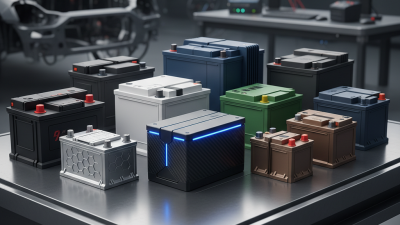
When it comes to selecting the best deep cycle car battery, understanding the different types available is crucial. The three primary categories are Gel, AGM (Absorbent Glass Mat), and Flooded Lead-Acid batteries. Each type has unique characteristics that cater to various needs.
Gel batteries, for instance, are known for their ability to withstand deep discharges, making them suitable for environments with temperature fluctuations. They utilize a silica-based gel that prevents spillage, which can be a significant advantage for mobile applications.
AGM batteries offer similar benefits to Gel batteries but with improved efficiency and faster charge times. Their construction allows them to handle higher discharge rates and is particularly favored for use in modern vehicles equipped with advanced start-stop technology.
According to a report by the Battery Council International, AGM batteries have a longer lifespan and can provide up to 20% more capacity than traditional flooded batteries, making them an excellent choice for demanding applications.
Flooded Lead-Acid batteries remain the most common type due to their lower upfront cost and widespread availability. However, they require regular maintenance and are less efficient at handling deep cycles, which can lead to a reduced lifespan if not properly cared for.
Tip: When choosing a battery, consider your power needs and how often you will discharge the battery. For frequent deep cycles, AGM or Gel batteries might be the best fit, while occasional use could warrant a Flooded Lead-Acid battery. Always check the warranty and cycle life as indicators of longevity and performance.
Tip: Ensure the chosen battery is compatible with your vehicle’s electrical system, and consult with a professional to help determine the best option based on your usage scenarios.
Evaluating Capacity and Power Requirements for Your Vehicle
When selecting a deep cycle car battery, understanding the capacity and power requirements specific to your vehicle is crucial. The capacity, often measured in amp-hours (Ah), indicates how long a battery can provide a steady amount of current before needing a recharge. It's essential to assess your vehicle's power needs based on its electrical systems, such as lights, audio systems, and other accessories that draw power. A higher capacity battery is beneficial for vehicles with extensive electronic features or those used for recreational purposes where prolonged power use is common.
In addition to capacity, you should also consider the power output of the battery. This is typically expressed in cold cranking amps (CCA), which measures the battery's ability to start the engine in cold temperatures. A battery with sufficient CCA will ensure reliable performance even in adverse conditions. When choosing a battery, it's advisable to match or exceed the original specifications of your vehicle's manufacturer to guarantee optimal operation. Tailoring your battery choice to your vehicle's specific power requirements will enhance its performance and longevity, ensuring you remain powered up on the road.
Key Features to Consider When Selecting a Deep Cycle Battery
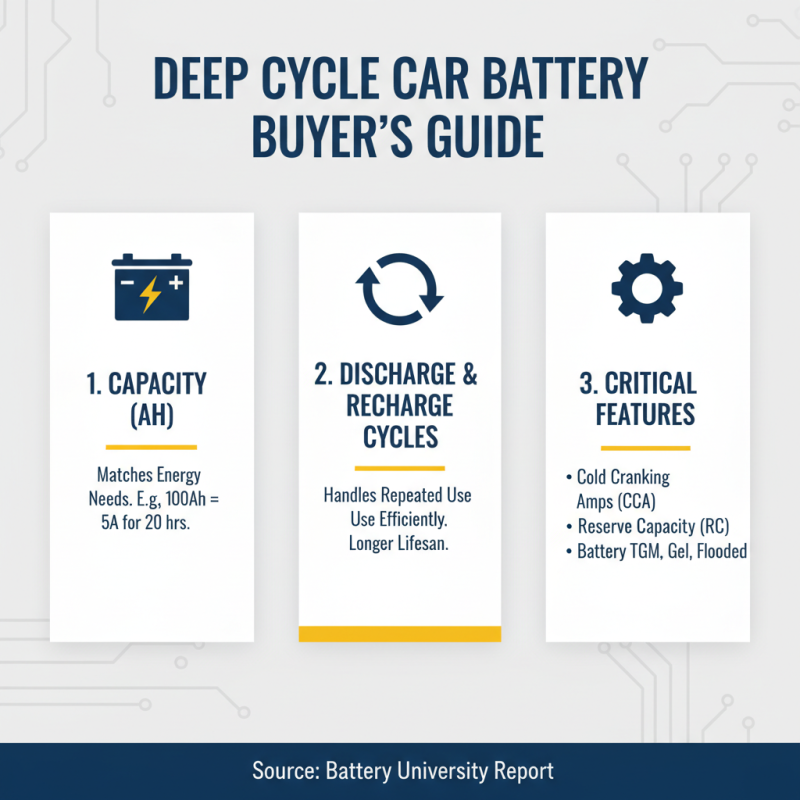
When selecting the best deep cycle car battery, several key features should be taken into account to ensure you're making an informed choice. One of the most critical aspects is the battery’s capacity, measured in amp-hours (Ah). According to a report by Battery University, a typical deep cycle battery should at least have a capacity that meets your energy needs; for example, a 100Ah battery can provide approximately 5 amps for 20 hours. It's essential to choose a battery that can handle your expected discharge rates and recharging cycles efficiently.
Another important consideration is the depth of discharge (DoD) the battery can withstand. Generally, a well-designed deep cycle battery can be discharged up to 80% of its capacity without significantly reducing its lifespan, unlike standard car batteries which should not be discharged below 50%. It’s advisable to look for batteries with higher DoD ratings for better performance and durability in off-grid scenarios or prolonged usage.
Tips: Always assess the weight and size of the battery to ensure it fits your vehicle's space and your power requirements. Additionally, consider batteries with built-in safety features, such as short-circuit protection and temperature regulation, to enhance reliability and prevent hazardous situations. Lastly, reviewing the manufacturer's warranty can give you insights into battery longevity and company confidence in their products.
Maintenance Tips for Prolonging the Life of Your Battery
Maintaining a deep cycle car battery is essential for ensuring its longevity and optimal performance. One of the fundamental tips for prolonging battery life is to keep the battery clean and free from corrosion. Regularly inspect the terminals for any signs of rust or buildup, as this can impede electrical connections.
Use a mixture of baking soda and water to gently clean the terminals and cables, and ensure they are securely attached to prevent any power losses.
Another crucial aspect of maintenance is monitoring the battery's charge level and performance. Deep cycle batteries should be regularly charged, particularly if they're used in applications with frequent discharging. Avoid letting the battery drop to extremely low charge levels, as this can lead to sulfation, significantly reducing its lifespan.
Investing in a smart charger that can automatically adjust its settings based on the state of the battery can help maintain optimal charge levels and prevent overcharging as well. Additionally, keeping the battery at a moderate temperature and avoiding extreme heat or cold can significantly enhance its durability and efficiency.