Choosing the right battery backup power supply can be challenging. An expert in the field, Dr. Emily Stevens, states, "The right battery backup can mean the difference between a minor inconvenience and a major disaster." Her insights underline the importance of informed decision-making when selecting a power supply.
Battery backup power supplies are crucial for both residential and commercial applications. With recent advancements in technology, options have multiplied. However, more choices can lead to confusion. It’s vital to assess personal needs carefully. Evaluating capacity, run time, and wattage is essential. Misjudging these factors could lead to inadequate performance.
Many users overlook essential features like surge protection and user-friendly interfaces. Each detail matters in ensuring reliability. The wrong choice might lead to frustration during an outage. Therefore, understanding the specific requirements of your devices and lifestyle is crucial. Knowledgeable selection will safeguard against unexpected power failures.

When selecting a battery backup power supply, understanding your power needs and usage scenarios is crucial. Start by evaluating how much power your devices require.
According to industry reports, the average household consumes around 877 kWh per month.
This translates to roughly 29 kWh per day. Knowing your daily consumption helps in determining the suitable capacity for a battery backup system.
Consider the devices you want to keep running during an outage. For instance, a fridge typically needs about 100-800 watts per hour.
In contrast, a computer may require 200-600 watts. If you need to power multiple devices, calculate the total wattage.
This could lead to potential oversights, as many users underestimate their combined wattage needs.
Think about how often you experience power outages. Research shows that, on average, urban areas face power interruptions at least
once a year, while rural areas can see them more frequently. If outages occur regularly, investing in a higher-capacity backup may be warranted.
Ultimately, balance your needs with your budget.
Each user’s scenario is unique, and what works for one may not fit another's requirements.
When choosing a battery backup power supply, understanding the types available on the market is essential. The two main categories include Uninterruptible Power Supplies (UPS) and battery generators. UPS systems provide immediate backup, typically used for computers and critical equipment. They can range in price, with smaller models costing around $100, while larger systems may exceed $1,000. According to a report by MarketsandMarkets, the UPS market is expected to reach $12.3 billion by 2025, showcasing its growing importance.
In contrast, battery generators offer longer power duration, making them suitable for home or outdoor use. These devices can power essential appliances during outages, available in various capacities. A survey by Grand View Research indicates that portable power stations will witness a 20% annual growth, highlighting their rising popularity among outdoors enthusiasts.
**Tips:** Consider the wattage your devices require. Check the total load to avoid short circuits. Also, assess how long you want backup power; this affects the capacity you choose. Keep in mind that some models can prove less efficient, requiring frequent recharges. Always review reviews and data before purchase.
| Type | Best For | Capacity (Watt-hours) | Run Time (Hours) | Price Range ($) |
|---|---|---|---|---|
| Uninterruptible Power Supply (UPS) | Home and Office Equipment | 500 - 3000 | 0.5 - 2 | 100 - 1000 |
| Portable Power Station | Camping and Outdoor Activities | 200 - 1500 | 1 - 10 | 150 - 800 |
| Inverter Generator | Recreational and Emergency Backup | 900 - 5000 | 3 - 12 | 400 - 2000 |
| Lead-Acid Battery Backup | Long-term Storage Solutions | 100 - 5000 | 2 - 6 | 50 - 1000 |
| Lithium-Ion Battery Backup | Smart Home Devices | 100 - 3000 | 2 - 8 | 200 - 1500 |
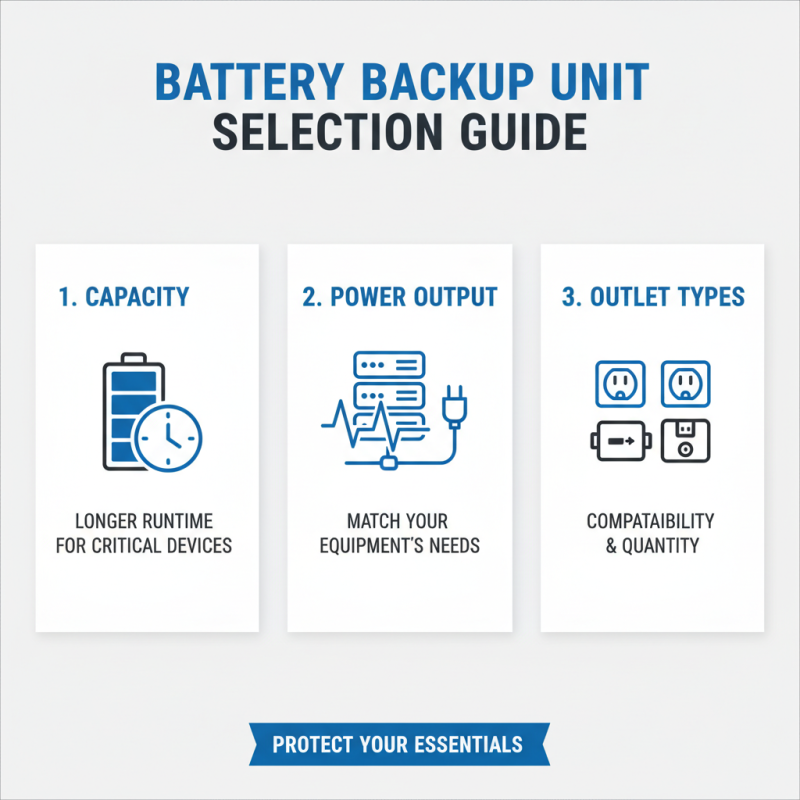
When choosing a battery backup power supply, several key features require careful consideration. Start with the capacity. It determines how long your equipment can run during an outage. A unit with a higher capacity offers more backup time. This can be crucial for critical devices like medical equipment or servers.
Pay attention to the number of outlets. Ensure there are enough ports for all devices you plan to connect. Also, check the unit's form factor. Some models are compact and easy to store, while others may take up more space. Find a balance that fits your environment.
Tips: Always assess your power needs before purchasing. Calculate the wattage of your devices to avoid undersizing your backup. Batteries have a lifespan, typically around 3-5 years. Consider replacing or maintaining them to ensure reliability. Invest time in reading user reviews to identify any recurring issues. Such insights can help you avoid models prone to failures.
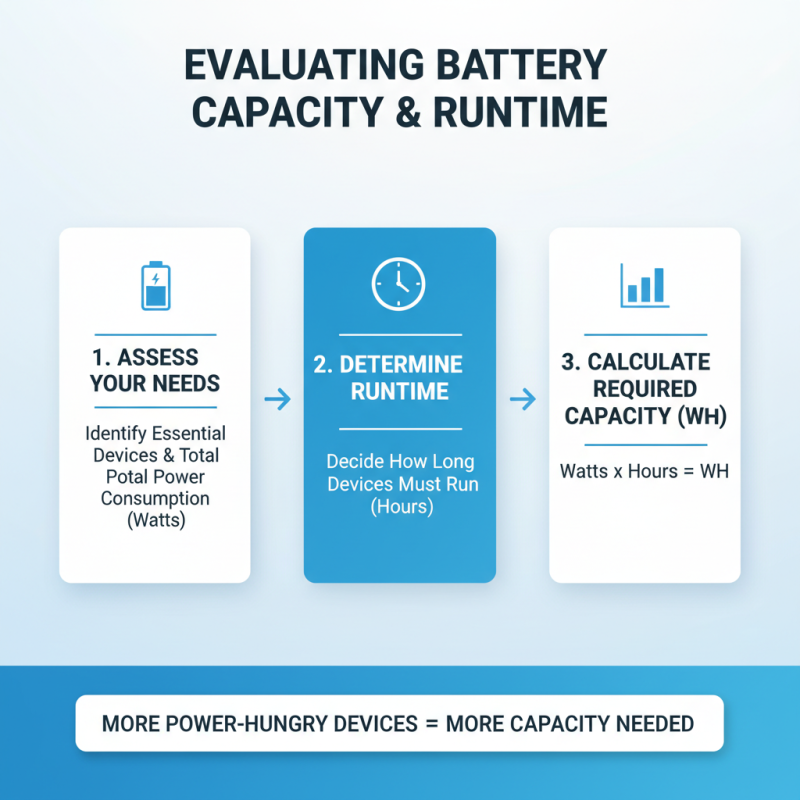
When choosing a battery backup power supply, evaluating battery capacity and runtime is crucial. It helps determine how long your devices will remain powered during an outage. For instance, if you're running essential appliances, you'll need more capacity. Consider what devices require the most power.
A common pitfall is underestimating your needs. Many users purchase a unit that barely meets their requirements. This could result in device shutdowns during extended outages. Think about your daily usage patterns. Do you need continuous power, or occasional backup? Adjust your expectations based on this assessment.
Tips: Measure the total wattage of your devices. Multiply this by the estimated running time. This offers a clearer picture of your battery needs. Always factor in some extra capacity for unexpected demands. It's better to have a bit more power than to run out mid-usage. Balancing capacity with runtime can help avoid disappointment later on.
When assessing budget and brand reliability for a battery backup power supply, critical factors come into play. According to industry reports, 45% of consumers prioritize brand reputation over price. This indicates a strong link between trust and purchasing decisions. A well-established brand often signifies reliability and innovation. Consumers should investigate a brand's history, customer service reviews, and warranty policies. Brands with fewer complaints tend to offer better post-purchase support, which is crucial during power outages.
However, budget constraints are a reality for many. Data show that 30% of buyers are driven primarily by price. This can lead to compromises. Cheaper models may not provide the necessary power or longevity. A study suggests that units priced in the mid-range often deliver the best balance between quality and affordability. Experts recommend ensuring the chosen model includes essential features like surge protection and sufficient capacity for your needs. Investing a little more upfront can yield long-term savings and peace of mind during emergencies.
This chart compares the estimated prices of different battery backup power supplies based on their wattage capacities. As the capacity increases, the price also tends to rise, illustrating the relationship between battery power needs and cost.