How to Choose the Best Deep Cycle Car Battery for Your Needs?
Choosing the right deep cycle car battery is crucial for optimal performance. Research indicates that nearly 37% of vehicle breakdowns are due to battery issues. A deep cycle car battery can provide steady power, designed for repeated discharge and recharge. This reliability is essential for various applications, including RVs and marine vehicles.
When selecting a deep cycle car battery, understanding your specific needs is vital. Battery specifications vary widely. For instance, the National Renewable Energy Laboratory reports that deep cycle batteries can last from 4 to 10 years, depending on usage and maintenance. Consider factors such as capacity, durability, and charging requirements.
However, many consumers still face challenges. Popular brands often claim superior performance, but real-world use can differ. It's essential to read reviews and seek expert opinions. Investing time in research can save you from poor choices. The right deep cycle car battery can enhance your vehicle's reliability and longevity, making it a worthwhile endeavor.

Understanding Deep Cycle Car Batteries: Definition and Purpose
Deep cycle car batteries are vital for various applications, from powering RVs to supporting electric vehicles. Unlike traditional batteries, deep cycle batteries are designed to be discharged and recharged repeatedly. They provide a consistent energy output over long periods, making them ideal for applications that require sustained power. According to industry reports, deep cycle batteries can withstand a discharge depth of about 80%, significantly more than standard batteries.
Understanding the purpose of deep cycle batteries is crucial. These batteries store energy, then release it gradually. Many manufacturers indicate that a quality deep cycle battery can deliver around 2000 to 3000 cycles at 50% depth of discharge. This longevity reflects their robustness. However, not all deep cycle batteries are suited for every situation. The requirements of marine use differ from those of solar power storage. This can lead to confusion, especially for consumers new to energy storage solutions.
Quality and capacity should guide your choice. Capacity is measured in amp-hours (Ah) and indicates how long the battery can provide power. For instance, a 100Ah battery might sustain a load of 20 amps for five hours. It's essential to assess your specific needs realistically. Oversizing can lead to underperformance, and undersizing can lead to premature failure. Therefore, careful consideration is necessary to ensure the selected battery meets your needs effectively.
Key Specifications to Consider for Deep Cycle Car Batteries
When selecting the best deep cycle car battery, understanding key specifications is crucial. One of the most important factors is the battery capacity, measured in amp-hours (Ah). This indicates how much energy the battery can store. A higher Ah means longer usage before a recharge is needed. For example, a 100 Ah battery can run appliances smoothly for an extensive period.
Another specification to consider is the discharge rate. Deep cycle batteries can handle repeated charging and discharging cycles. Look for batteries with a low self-discharge rate. This ensures the battery retains its charge when not in use. A reliable battery should also have a good lifespan, ideally at least five years, given proper care.
Pay attention to the type of deep cycle battery as well. There are flooded lead-acid, AGM, and lithium options. Each type has its benefits and drawbacks. Flooded batteries are affordable but need maintenance. AGM batteries are spill-proof and require less care. Lithium batteries are lightweight but come at a premium price. Reflecting on these details can help you make a more informed decision for your needs.
How to Choose the Best Deep Cycle Car Battery for Your Needs? - Key Specifications to Consider for Deep Cycle Car Batteries
| Specification |
Description |
| Type |
Absorbent Glass Mat (AGM), Gel, Flooded Lead Acid |
| Capacity (Ah) |
Ranges from 50 Ah to 300 Ah depending on use |
| Voltage |
Typically 12V for most automotive applications |
| Weight |
Ranges from 30 lbs to 80 lbs based on size and technology |
| Cycle Life |
300 to 1200 cycles, depending on depth of discharge |
| Discharge Rate |
Varies, typically between C/20 to C/100 |
| Temperature Range |
-20°C to 60°C depending on type |
| Warranty |
Typically 1 to 3 years, varies by manufacturer |
Comparing Lead-Acid vs. Lithium-Ion Deep Cycle Batteries
When choosing a deep cycle car battery, it’s essential to compare lead-acid and lithium-ion options.
Lead-acid batteries have been around for decades. They are often more affordable upfront, making them appealing to budget-conscious consumers. However, they tend to be bulkier and heavier. This can be a drawback for some applications where space and weight are critical factors.
On the other hand, lithium-ion batteries are gaining popularity. They are lighter and more efficient, offering higher energy density. This means you can get more power in a smaller package. However, they come with a higher initial cost. It’s important to consider your specific needs, such as usage frequency and duration. Not all applications may justify the investment in lithium-ion technology.
While lead-acid batteries might require more maintenance over time, they tend to be more forgiving in extreme temperatures. Reflect on your typical usage environment. This can significantly affect performance and longevity. Evaluating these aspects can guide you toward the best deep cycle battery for your needs.
Evaluating Battery Capacity: CCA, Ah, and Runtime Requirements
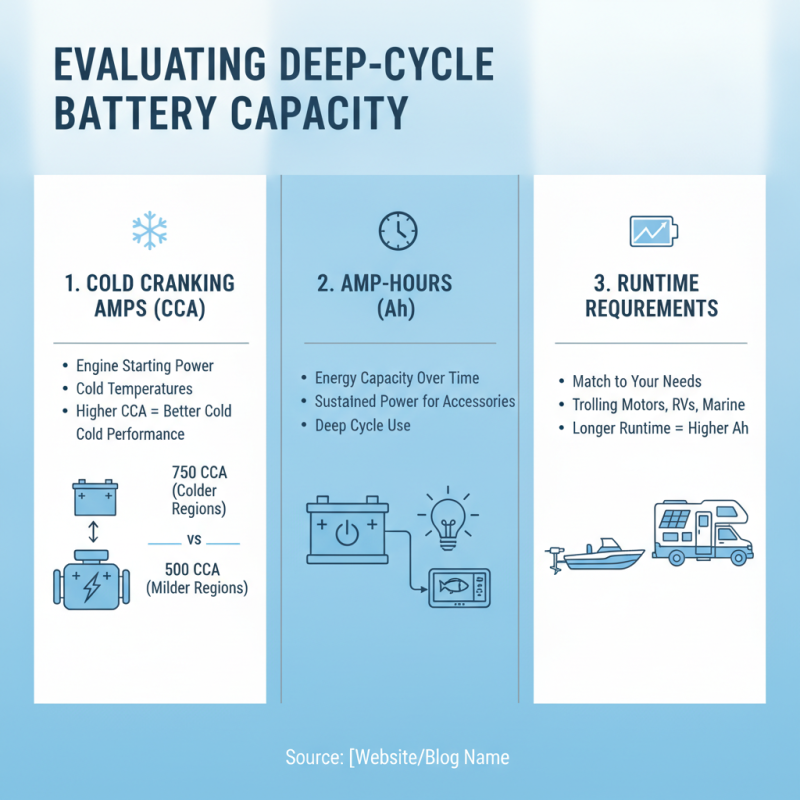
When selecting a deep cycle car battery, understanding battery capacity is essential. Capacity is measured in two critical metrics: Cold Cranking Amps (CCA) and Amp-hours (Ah). CCA indicates a battery's ability to start an engine in cold temperatures, while Ah measures the energy capacity over time. Research shows that a higher CCA rating often correlates with better performance in challenging conditions. For example, a battery with 750 CCA is more suited for colder regions compared to one rated at 500 CCA.
A detailed evaluation is necessary when considering runtime requirements. Batteries with higher Ah ratings typically provide longer discharge durations. For instance, a 100Ah battery can theoretically deliver 5 amps for 20 hours. It's important to note the actual runtime can vary based on usage. If you connect multiple devices, the discharge rate will change. Many users overlook the implications of deep discharges, which can shorten battery life. Regularly check how your devices impact power consumption.
Choosing the right battery involves careful consideration of your unique needs. Not all batteries perform equally under diverse conditions. Factors like temperature and usage patterns may affect overall performance. Be aware of your specific requirements to avoid disappointment down the line. Deep cycle batteries can offer reliable power solutions, but it is crucial to do proper evaluations beforehand.