How to Choose the Right Deep Cycle Boat Battery for Your Needs?
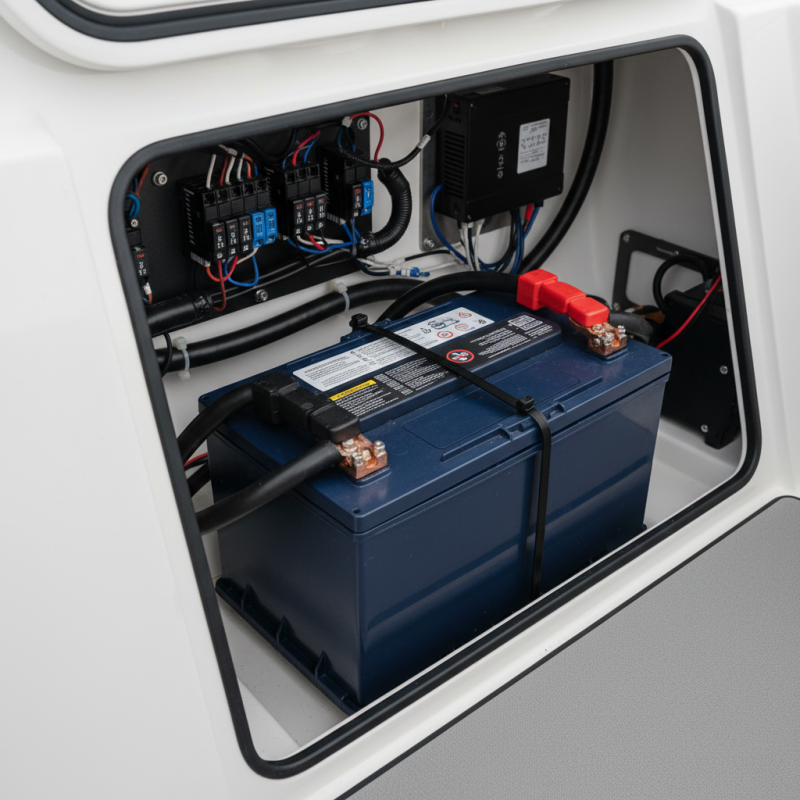
Choosing the right deep cycle boat battery can be challenging. It requires careful consideration of your unique needs. Different batteries offer various features and benefits.
When selecting a deep cycle boat battery, think about your power requirements. Are you using it for fishing, cruising, or offshore adventures? Each activity demands different energy.
Compatibility with your boat's electrical system is also crucial. The wrong battery can lead to inefficiency and frustration. Sometimes, people overlook these details, leading to regrets later. Take your time to research and understand your options.
Understanding Deep Cycle Batteries: Types and Applications
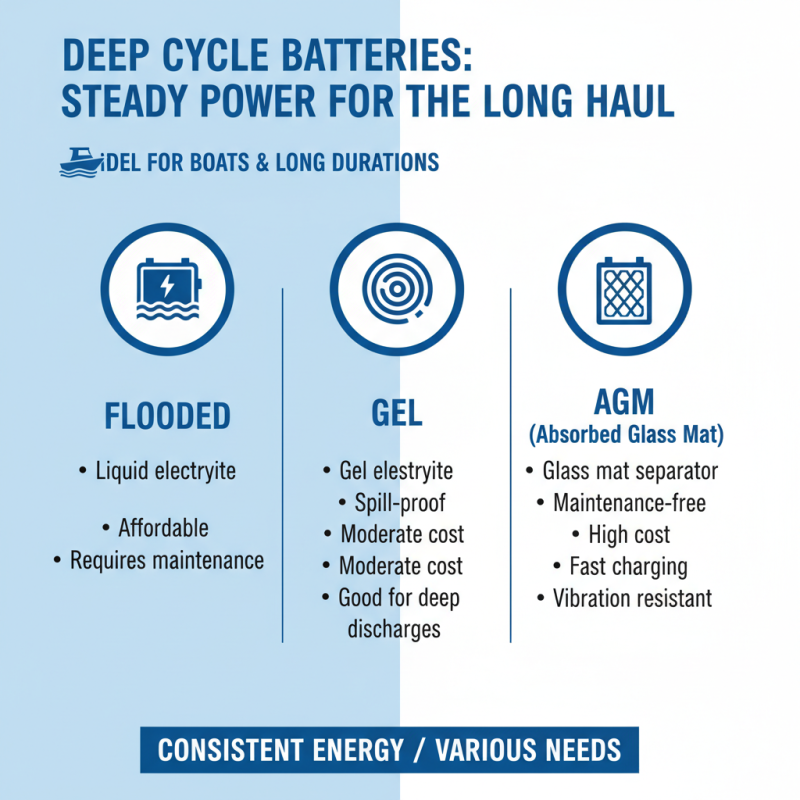
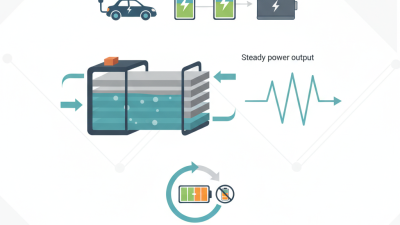
Deep cycle batteries serve unique purposes. They are designed to provide a steady amount of power over long durations. This makes them perfect for boats, which often rely on consistent energy for various needs. Key types include flooded, gel, and absorbed glass mat (AGM) batteries. Each type has distinct features and advantages.
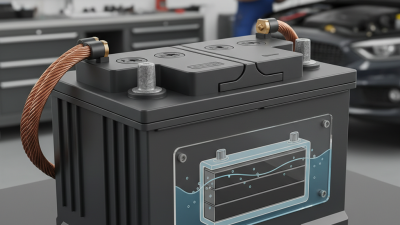
Flooded batteries are more budget-friendly. They require regular maintenance, such as checking water levels. Gel batteries are maintenance-free. They offer better resistance to vibration and temperature changes. AGM batteries also need no maintenance. They are designed for high power outputs and are often more durable.
When choosing, consider your boat's specific needs. Assess how much power you'll require. Also, gauge how long you plan to be out on the water. This impacts your choice significantly. Remember, while the capacity is important, the right type makes all the difference. Reflect on how often you might encounter rough conditions. This could affect your battery's performance and lifespan.
Key Considerations for Selecting Deep Cycle Batteries for Marine Use
When selecting a deep cycle battery for marine use, several key considerations come into play. First, the capacity of the battery is crucial. Measured in amp-hours (Ah), this indicates how much energy the battery can store and transfer. For instance, a battery with 100Ah can theoretically power a device drawing 10 amps for 10 hours. Additionally, marine environments often require batteries that can withstand deep discharges, typically from 50% charge or lower. Research indicates that batteries with higher discharge cycles last significantly longer in marine applications.
Another vital factor is the battery's weight and size. Marine batteries are usually housed in tight spaces. A battery that is too heavy or large can throw off boat balance and make handling difficult. Weight directly affects the boat's performance and fuel efficiency. It's often suggested to check the boat's specifications before making a choice. One should also consider the temperature range where the battery will be used. Extreme temperatures can reduce efficiency and lifespan.
Lastly, pay attention to the maintenance requirements. Some batteries require regular fluid checks and top-ups, while others are maintenance-free. Simplifying care can be important for boaters who prioritize ease of use. When making a decision, personal usage scenarios and preferences should be reflected. Choosing the right battery is not just about specifications. It’s about finding a fit that meets your specific boating needs without compromising performance.
Battery Capacity and Reserve Capacity: Calculating Your Power Needs
Battery capacity is crucial when selecting a deep cycle boat battery. It determines how long you can run devices before recharging. The capacity is measured in amp-hours (Ah). For example, a 100 Ah battery can theoretically power a device drawing 10 amps for 10 hours.
Reserve capacity (RC) is another key factor. It indicates how long a battery can supply power if the charging system fails. Common RC ratings lie between 120 to 250 minutes. Industry reports suggest that a higher RC is better for marine environments, where unexpected situations arise.
Calculating your needs involves assessing all the electrical devices you plan to use. Consider the total amperage required. It's common to underestimate consumption rates, leading to battery failure at critical moments. Monitoring your usage habits can reveal patterns. This reflection can help avoid future pitfalls. Battery life can be significantly impacted by how well it’s matched to power needs. Choose wisely.
Battery Capacity and Reserve Capacity for Deep Cycle Boat Batteries
Evaluating Battery Lifespan and Cycle Life for Optimal Performance
When selecting a deep cycle boat battery, understanding battery lifespan and cycle life is crucial. The battery lifespan refers to how long it can function effectively before it needs replacement, while cycle life indicates the number of charge and discharge cycles it can endure. According to industry reports, a good quality deep cycle battery typically lasts between 1,000 to 2,000 cycles at a 50% discharge rate. This means a battery can last several years under optimal usage conditions.
Evaluating these metrics helps ensure optimal performance. Consider a scenario where you regularly use your battery for 30% of its capacity daily. In this case, the actual lifespan may exceed expectations, possibly lasting up to five years. Conversely, discharging it beyond 80% regularly can severely shorten its life. Additionally, it's essential to factor in environmental conditions. Extreme temperatures can diminish a battery's efficiency. For instance, the performance of lead-acid batteries drops significantly in temperatures below 32°F.
Reflecting on your specific usage can guide your decision. Are you using your boat frequently, or is it seasonal? Understanding the cycle life can prevent unexpected failures during your trips. Regularly monitoring the voltage and maintaining your battery can extend its life beyond the manufacturer’s claims. Always consider these factors when making your choice.
Comparing Maintenance-Free vs. Conventional Deep Cycle Batteries
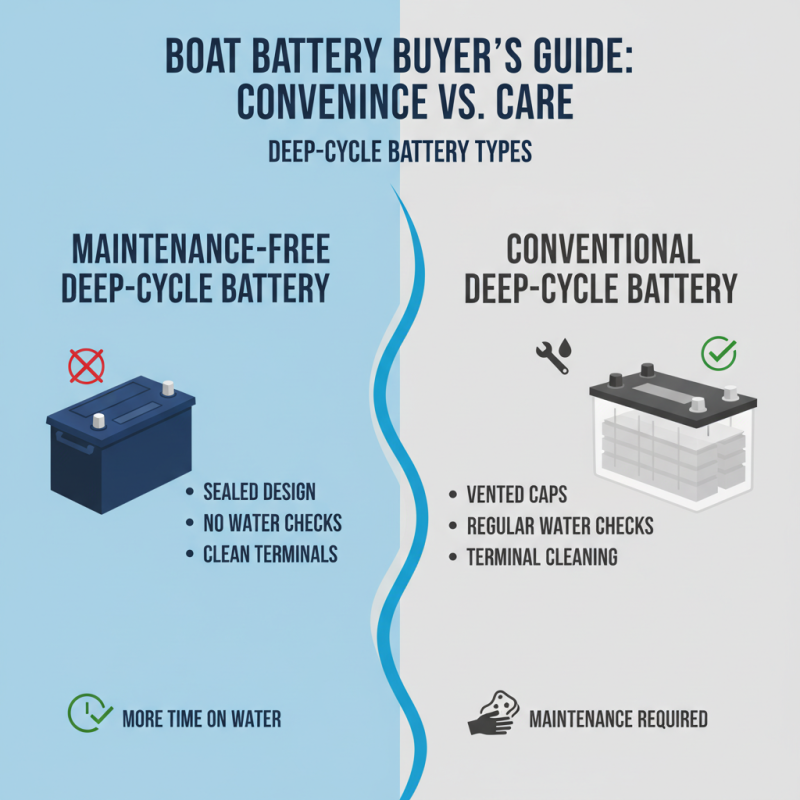
When selecting a deep cycle battery for your boat, the choice between maintenance-free and conventional batteries is crucial. Maintenance-free batteries, often sealed and designed to be low-maintenance, offer convenience. You don't need to check water levels or clean terminals regularly. This can save you time on the water and reduce the risk of battery failure due to neglect.
On the other hand, conventional deep cycle batteries may require more attention. They often need periodic water checks and electrolyte adjustments. However, some users appreciate the control this offers. You can tend to them as needed to extend their lifespan. It’s a different level of commitment. That said, improper maintenance can lead to reduced performance and a shorter battery life. Consider your boating habits carefully before deciding.
Reflect on how often you use your boat. If it's frequent, maintenance-free may be a better choice. For occasional users willing to invest time, conventional could be suitable. Ultimately, the decision reflects your balance of convenience and care. Before making a choice, think about your needs and what you're willing to maintain.