Calculating battery power requirements begins with a practical question: what must the battery operate, and for how long? A small pump, medical sensor, or electric motor may show different demands during startup and normal operation. Their labels rarely tell the whole story. A reliable estimate separates continuous power from peak power, then checks energy consumption over time.
As Thomas Edison stated, “The storage battery is, in my opinion, one of the greatest inventions of the nineteenth century.” His observation still reflects the battery’s importance in modern systems. Today, battery power calculations usually begin with voltage, current, operating hours, and efficiency. Use the formula Power = Voltage × Current. Then estimate energy with Energy = Power × Time. For example, a 12-volt device drawing 5 amperes uses about 60 watts. Running for four hours requires approximately 240 watt-hours before losses. In practice, the battery should provide more.
Efficiency matters. Temperature matters too. So does aging. Inverters, cables, and battery-management systems consume energy, sometimes more than expected. A sensible design adds a safety margin, often between 20% and 30%, depending on the application. However, a large margin can increase cost, weight, and charging time. Bigger is not automatically better.
The first estimate is rarely perfect. Real testing may reveal short surges, reduced capacity, or unexpected standby loads. Therefore, compare calculations with manufacturer data and measured current readings. This article explains each step clearly, helping readers select battery power capacity with greater confidence and fewer costly assumptions.
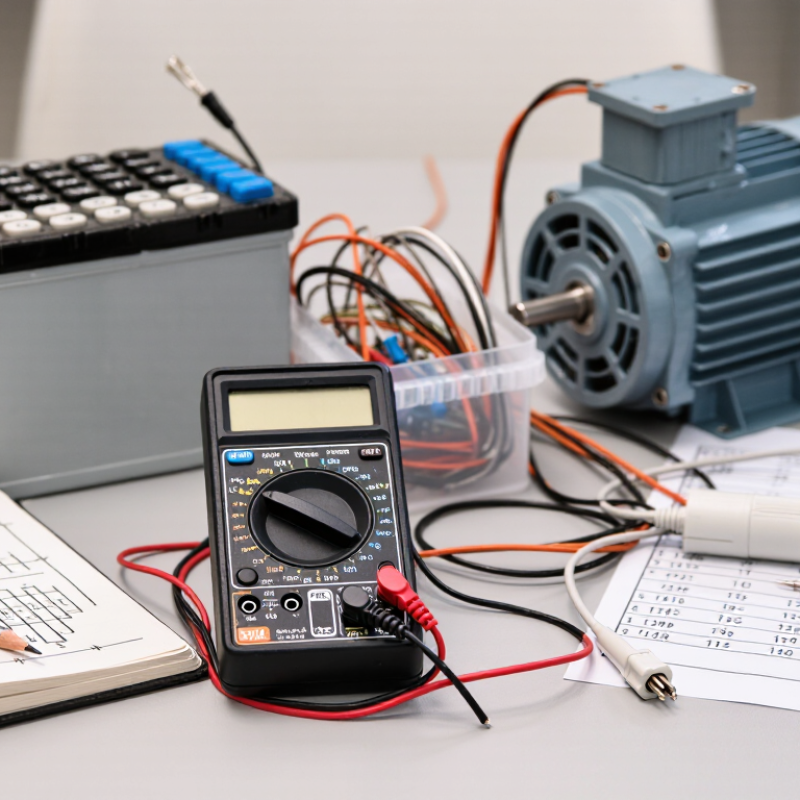
To calculate battery power requirements, define what the application must do before selecting a battery. Measure each load’s voltage, running power, startup surge, and operating time. A small pump may draw 40 watts continuously, then briefly demand 90 watts during startup. Record both values. Calculate energy with this formula:
A 40-watt load running for six hours needs 240 watt-hours. Include losses from wiring, controllers, and inverters. If total efficiency is 85 percent, divide 240 by 0.85. The battery then needs about 282 watt-hours.
Battery capacity also depends on voltage. Divide required watt-hours by nominal voltage to estimate amp-hours. At 24 volts, 282 watt-hours equals approximately 11.8 amp-hours. This is not the final specification. Limit usable depth of discharge, especially in cold or hot environments. Add reserve capacity for aging, unexpected delays, and measurement error. A practical design may require 15 to 18 amp-hours instead. Check continuous current and peak current separately. The battery must handle the surge without excessive voltage drop. Real applications rarely follow perfect estimates. Recheck the figures after testing the actual equipment.
How to Calculate Battery Power Requirements?
Identify the load’s voltage, current, and operating time before choosing a battery. These three values define the energy demand. Check the equipment label, installation guide, or a reliable meter. Do not trust a label blindly. Some devices draw more current during startup or under heavy work. A small pump, for example, may use 2 amps normally but briefly require twice that amount.
For a simple DC load, multiply voltage by current to find power. A 12-volt device drawing 2 amps uses 24 watts. If it runs for six hours, its energy requirement is 144 watt-hours. Battery capacity can be estimated with this formula: watt-hours divided by battery voltage. However, real systems lose energy through wiring, temperature, and conversion equipment. With 85% system efficiency and 80% usable battery capacity, 144 watt-hours requires about 18 amp-hours at 12 volts.
Measure the load during real operation when possible. Record current at startup, during normal use, and while the device is idle. Operating time also matters. A heater may run continuously, while a controller may operate only intermittently. That difference can change the battery size significantly. Add a practical reserve, often 20 to 30 percent, for aging and unexpected demand. This is not a perfect rule. Cold conditions can reduce available capacity, and thin cables can create voltage drop. Recheck the calculation after installation. The first estimate is useful, but field measurements may expose assumptions you missed.
Battery sizing starts with energy consumption, not battery voltage alone. List each device, its wattage, and daily operating hours. Multiply watts by hours to find watt-hours (Wh). For example, a 60-watt device running for eight hours uses 480 Wh. Add the loads together for a realistic daily estimate. Small devices are easy to overlook.
Convert energy into battery capacity with this formula: amp-hours (Ah) = watt-hours ÷ voltage. A 480 Wh load at 12 volts requires 40 Ah under ideal conditions. Real batteries need extra capacity. Account for inverter losses, temperature, aging, and the usable depth of discharge. With 85% system efficiency and 80% usable capacity, the requirement becomes about 59 Ah. Include starting surges for motors, pumps, or compressors. A spreadsheet may look precise, but field conditions can differ.
Tips: Measure actual power with a meter when possible. Check the battery’s rated voltage and discharge limits. Add a safety margin of 15–30%. Recheck your estimate during unusually cold or hot weather. Oversizing costs money, yet undersizing may cause shutdowns and faster wear. –
How to Calculate Battery Power Requirements?
Start with the load’s continuous wattage, then identify every device that starts suddenly. A small pump may draw 900 watts briefly, while using only 250 watts during normal operation. Record both figures. Battery power must handle the peak, not just the comfortable average. Add the loads that may run together. Do not trust a single label.
Efficiency losses change the calculation. Inverters, cables, and battery protection circuits consume energy. If your equipment needs 600 watts and the system operates at 85% efficiency, divide 600 by 0.85. The battery must supply about 706 watts. Measure real performance when possible. Heat, low temperatures, and aging can reduce efficiency further. Field measurements often expose assumptions that look perfect on paper.
Leave a safety margin for startup surges, temperature changes, and gradual battery degradation. A practical margin may range from 20% to 30%, depending on the application and test data. For the example, 706 watts with a 25% margin becomes about 883 watts. Battery capacity also matters: a 600-watt load running four hours requires 2,400 watt-hours before losses. After efficiency losses and margin, the requirement approaches 3,530 watt-hours. Check voltage, current, wiring limits, and manufacturer specifications together. A calculation can still be wrong. I would recheck it under the worst realistic conditions, because a quiet test room rarely matches daily use.
Accounting for efficiency losses, peak loads, and a 20% safety margin
This example assumes a 450 W continuous load, a 750 W peak load, and 90% conversion efficiency. Continuous battery power is calculated as 450 W ÷ 0.90 = 500 W. The peak battery requirement is 750 W ÷ 0.90 ≈ 833 W. Applying a 20% safety margin gives a recommended design power of approximately 1,000 W.
How to Calculate Battery Power Requirements?
Begin with the load, not the battery. List each device, its wattage, and daily operating hours. Multiply watts by hours to estimate energy use in watt-hours. Then divide by system voltage to estimate amp-hours. Include inverter losses, charging losses, and a safety margin of about 20% to 30%. A 100-watt device running for five hours needs 500 watt-hours before losses. Peak demand matters too. Motors, pumps, and compressors may briefly require several times their running power.
Select chemistry according to the application. Lithium-based batteries usually provide higher usable capacity, lower weight, and better cycle performance. Lead-based batteries can suit stationary systems when upfront cost and simple servicing matter. Check the battery’s voltage, continuous current rating, surge rating, and recommended depth of discharge. A battery rated at 100 amp-hours may not safely deliver all 100 amp-hours every day. That assumption is common, but it is not always accurate.
Tips: Test real consumption with a meter when possible. Ratings are laboratory figures. Cold weather reduces available capacity, while heat can shorten service life. Leave ventilation and cable losses in your calculation. I once trusted a label too much, and the system failed during startup. Recheck your numbers under the worst realistic conditions.
Use the table below to estimate battery capacity and power requirements. Values marked as typical ranges can vary by cell design, manufacturer specifications, age, temperature, discharge rate, and installation conditions.
| Battery Chemistry | Nominal Voltage per Cell | Typical Usable Depth of Discharge | Typical Continuous C-Rate | Low-Temperature Behavior | Recommended Design Factor | Best-Fit Applications |
|---|---|---|---|---|---|---|
| Flooded Lead-Acid | 2.0 V | Approximately 50% | 0.05C–0.2C | Capacity decreases in cold weather; charging below freezing can cause damage. | Multiply calculated capacity by 1.5–2.0 to limit deep discharge and account for aging. | Backup systems, traction equipment, and low-cost stationary storage where ventilation is available. |
| Valve-Regulated Lead-Acid | 2.0 V | Approximately 50% | 0.05C–0.3C | Available capacity falls at low temperatures; charging limits must follow the battery specification. | Multiply calculated capacity by 1.5–2.0. | Uninterruptible power supplies, emergency lighting, and telecommunications backup. |
| Lithium Nickel-Manganese-Cobalt Oxide (NMC) | 3.6–3.7 V | Approximately 80%–90% | 0.5C–2C | Charging below 0°C generally requires heating or battery-management protection. | Multiply calculated capacity by 1.15–1.3, plus inverter and aging allowances. | Portable equipment, electric mobility, and compact energy-storage systems. |
| Lithium Iron Phosphate (LFP) | 3.2–3.3 V | Approximately 80%–90% | 0.5C–2C | Charging below 0°C is normally restricted without battery heating; discharge performance declines in the cold. | Multiply calculated capacity by 1.15–1.3, plus inverter and aging allowances. | Stationary storage, recreational vehicles, marine systems, and solar energy storage. |
| Nickel-Metal Hydride (NiMH) | 1.2 V | Approximately 60%–80% | 0.2C–1C | Performance is reduced in cold conditions; self-discharge is higher than most lithium-ion systems. | Multiply calculated capacity by 1.25–1.5. | Hybrid systems, consumer equipment, and applications requiring robust cycling. |
| Calculation Item | Formula | Example Input | Example Result | Practical Interpretation | ||
| Daily Energy Consumption | Energy = Power × Operating Time | 120 W load × 8 h/day | 960 Wh/day | Add the energy use of every load that must operate during the design period. | ||
| Battery Energy for Autonomy | Required Energy = Daily Energy × Autonomy Days | 960 Wh/day × 2 days | 1,920 Wh | Autonomy days represent how long the system must operate without charging input. | ||
| Nominal Battery Capacity | Capacity = Required Energy ÷ (Voltage × Usable DoD) | 1,920 Wh ÷ (24 V × 0.80) | 100 Ah | This example assumes a 24 V battery and an 80% usable depth of discharge. | ||
| Inverter Loss Adjustment | Adjusted Energy = Load Energy ÷ Inverter Efficiency | 960 Wh ÷ 0.90 | 1,067 Wh/day | A 90% efficient inverter requires approximately 11% more battery energy than the AC load consumes. | ||
| Temperature and Aging Adjustment | Design Capacity = Calculated Capacity × Adjustment Factor | 100 Ah × 1.25 | 125 Ah | A factor of 1.25 can provide a reasonable planning margin for moderate aging and environmental losses; verify it against the battery datasheet. | ||
| Peak Power Requirement | Peak Battery Power = Peak AC Power ÷ Inverter Efficiency | 1,000 W ÷ 0.90 | 1,111 W | Use the highest simultaneous load, including motor-starting or compressor surge requirements. | ||
| Approximate DC Current | Current = Power ÷ Battery Voltage | 1,111 W ÷ 24 V | 46.3 A | Cables, fuses, disconnects, and the battery-management system must be rated above the expected continuous and surge current. | ||
| Parallel Battery Quantity | Quantity = Required Capacity ÷ Capacity per Battery | 125 Ah ÷ 100 Ah | 2 batteries in parallel | Round up to the next whole unit and use batteries with matching chemistry, voltage, age, and condition. | ||