
Choosing the right Entertainment Projector in 2026 requires more than comparing brightness numbers. It requires matching technology with real viewing habits, room conditions, and content sources. A dark bedroom, a bright living room, and an outdoor patio demand different specifications.
Industry forecasts show why this category deserves careful attention. Grand View Research estimates that the global projector market reached approximately $10.53 billion in 2023, with projected growth through 2030. However, market reports often define “projector” differently. Some include business devices, while others focus on home cinema products. That limitation matters.
Futuresource Consulting’s projector research also highlights continuing demand for home entertainment and premium display experiences. Yet popularity does not guarantee a good purchase. A projector with impressive marketing claims may produce weak shadow detail, loud fan noise, or poor motion handling. Numbers can mislead.
Room size changes everything.
This guide examines brightness, resolution, contrast, throw distance, input lag, HDR performance, operating-system support, and lamp or LED lifespan. It also considers practical details, such as whether subtitles remain readable on a 100-inch screen and whether a streaming stick fits without blocking nearby ports. ANSI lumens and ISO lumens should not be treated as identical measurements. Buyers should check the testing method and the manufacturer’s technical documentation.
The best Entertainment Projector is not always the brightest or most expensive model. It is the one that performs consistently in your space. That sounds simple, but it requires honest compromises. A budget model may deliver excellent size and color, while sacrificing black levels or built-in audio. Reflect on your room first. Then compare the specifications that genuinely affect your viewing experience.
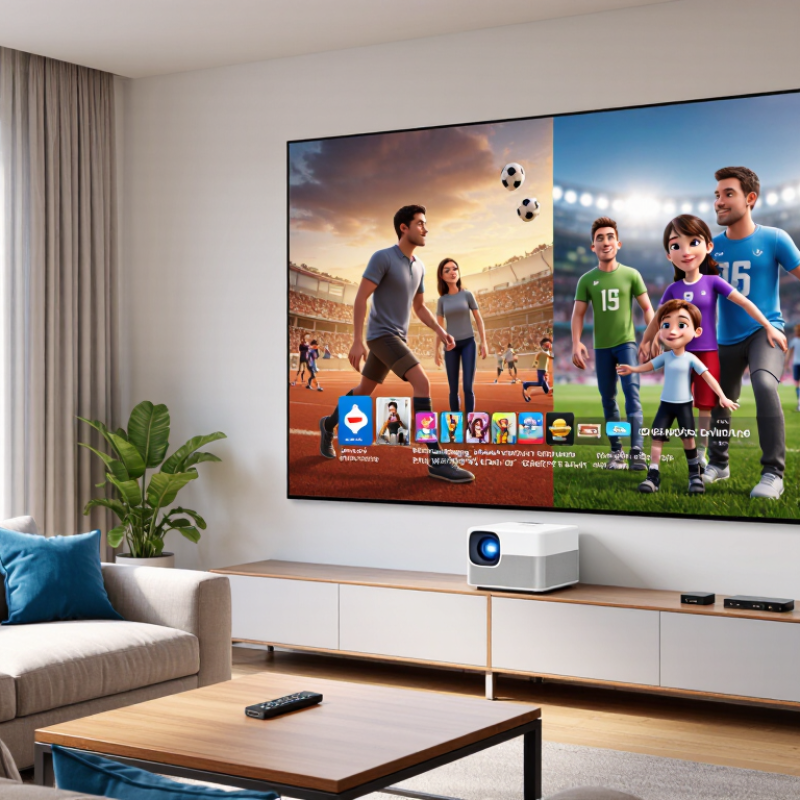
Choosing the best entertainment projector in 2026 starts with your actual viewing habits. Define what you want to watch most often. Films need accurate color and strong contrast. Sports benefit from smooth motion and low input delay. Games require quick response and clear detail. Family viewing may favor simple controls and flexible placement. A projector with impressive specifications can still disappoint when it does not match your routine.
Study the room before comparing models. Measure the distance between the lens and screen, then check the available image size. A bright living room needs higher light output or better window control. Dark rooms can reveal deeper shadows and more natural colors. Wall color matters too. A warm wall may change skin tones slightly. I once underestimated a ceiling light, and daytime viewing became noticeably washed out. That mistake was avoidable.
Tips: Test the projector at your usual viewing time. Check subtitles from the sofa, not from the doorway. Listen for fan noise during quiet scenes. Leave space around the vents. If children use the room, choose a stable installation and protected cables. Do not chase the largest image automatically. A huge picture can look soft, tiring, and strangely less cinematic.
These planning targets are calculated for a 16:9 screen using approximately 16 foot-lamberts for a dark cinema room, 30 foot-lamberts for mixed lighting, and 50 foot-lamberts for a bright room. Larger screens and stronger ambient light require higher projector output to maintain a clear, comfortable image.
Choosing the best entertainment projector in 2026 starts with matching image quality to your room. Resolution affects detail, especially on a large screen. A 4K image can reveal fabric texture, subtitles, and small background objects more clearly than 1080p. However, resolution alone does not guarantee a better picture.
Brightness should suit your viewing space. For a dark room, moderate brightness often produces richer blacks and softer highlights. In a living room with daylight, higher brightness helps, but excessive output may make colors look pale. Check measured ANSI lumens, not only advertised figures. Contrast also matters during night scenes. Strong contrast separates a black jacket from a dark wall, though quoted contrast ratios can be difficult to compare between tests. I have found real viewing conditions more useful than impressive specifications.
Tips: Compare projectors using the same screen size and movie scene. Look for natural skin tones, clean shadow detail, and smooth motion. Color performance should feel balanced, not overly vivid. Wide color coverage helps HDR content, but poor calibration can still create green faces or red skies. A projector with accurate factory settings may outperform a brighter model requiring extensive adjustment. Still, specifications are only part of the decision. Room walls, screen material, viewing distance, and personal preference can change the result. Test before buying when possible. That step is easy to overlook.
How to Choose the Best Entertainment Projector in 2026?
Evaluate Throw Distance, Screen Size, and Installation Flexibility
Throw distance starts with the lens, not the room. Divide the projector-to-screen distance by image width to find throw ratio. A 0.5:1 lens needs roughly 52 inches for a 120-inch, 16:9 image. Measure from the lens, not the rear panel. That small mistake can ruin an installation. For ceiling mounting, leave space for ventilation and cable bends. A few inches matter.
Screen size should match viewing distance. SMPTE Engineering Guideline EG 18-1994 uses a 30-degree horizontal viewing angle as a useful cinema reference. At 12 feet, a 120-inch screen feels immersive without forcing constant head movement. Yet personal tolerance varies. I prefer testing with subtitles and fast sports footage. Dark scenes expose poor brightness quickly. Projector brightness should also reflect ambient light, screen gain, and image size. The 2024 AVIXA Industry Outlook and Trends Analysis identifies integration services as a major professional AV market category, reinforcing the value of planned installation rather than casual placement.
Installation flexibility deserves equal attention. Lens shift preserves image geometry when the projector sits above or beside center. Digital keystone correction is convenient, but it can reduce effective detail. Use it sparingly. A compact room may benefit from a short-throw design, while a deep room allows quieter rear placement. Cable access, replacement-lamp clearance, and adjustable mounts are easy to overlook. I have overlooked them too. Measure twice. Then test the actual wall.
Choosing the best entertainment projector in 2026 starts with connectivity, not brightness alone. Look for multiple HDMI inputs, reliable Wi-Fi, Bluetooth audio, and a lossless audio return channel. These ports should support a streaming device, game console, and sound system without constant cable swapping. Wireless casting is convenient, but it can fail in crowded apartments. I learned that lesson after a film paused repeatedly beside a busy router.
Smart features also need practical testing. A responsive interface, automatic focus, keystone correction, and frequent security updates matter more than a long app list. Check whether major streaming services work natively. Some systems look impressive but become slow after a year. Deloitte’s 2024 Digital Media Trends report found that 73% of U.S. households subscribed to at least one paid streaming service, so app stability is not a minor detail.
Sound and gaming performance deserve equal attention. Built-in speakers may suit a bedroom, but dialogue can sound thin in a large room. Reserve space for external audio. Newzoo’s 2024 Global Games Market Report estimates 3.42 billion players worldwide, making low input lag increasingly important. For gaming, seek measured latency below 20 milliseconds, a 120Hz mode, and variable refresh support. Advertised figures can be optimistic. Test them yourself. A bright image still feels disappointing when controls respond late.
How to Choose the Best Entertainment Projector in 2026?
The best entertainment projector is not automatically the brightest model. It should remain affordable and dependable after years of movie nights. Compare the purchase price with operating hours, energy use, and replacement parts. A projector used ten hours weekly faces different costs from one used every weekend. Measure your room carefully. An unsuitable throw distance creates expensive compromises.
Light-source lifespan matters, but published figures need context. High-brightness modes can increase heat, fan noise, and power consumption. A sealed optical engine may reduce dust problems, while a filter-based design can be easier to service. Check filter prices, cleaning instructions, lamp availability, and local repair support. Small costs accumulate. Keep space around ventilation areas, clean accessible filters, and avoid soft fabric surfaces. These habits can protect image stability and delay repairs.
Overall value includes warranty length, software support, connection reliability, and resale potential. Look for independent brightness measurements, realistic contrast testing, and clear service terms. I would not choose a cheaper projector if it failed during every family gathering. Yet paying for unused gaming features is wasteful. No calculation is perfect. Estimate five-year ownership costs, then add a modest repair buffer. That uncomfortable number may change your buying decision.
Five-year comparison based on typical 2026 home-entertainment projector specifications and operating costs
| Projector Type | Typical New Price | Native Resolution | Typical Brightness | Light Source Life | Average Power Draw | Expected 5-Year Energy Cost | Likely Maintenance Cost | Five-Year Ownership Cost | Best Use Case | Overall Value |
|---|---|---|---|---|---|---|---|---|---|---|
| Entry-Level Lamp Projector | US$450–700 | 1920 × 1080 | 2,500–3,500 ANSI lumens | Approximately 4,000–6,000 hours | 250–320 W | Approximately US$160–205 | US$150–250, including one replacement lamp and basic filter care | Approximately US$950–1,250 | Movie nights, sports, and occasional gaming in rooms with controlled lighting | Strong initial affordability; lamp replacement must be budgeted |
| Mid-Range 4K Pixel-Shift Lamp Projector | US$900–1,500 | 3840 × 2160 output through pixel shifting | 2,500–3,500 ANSI lumens | Approximately 3,000–5,000 hours | 300–380 W | Approximately US$190–245 | US$250–400, commonly including one replacement lamp | Approximately US$1,550–2,250 | Dedicated home theaters where sharper 4K-compatible images are important | Good image quality, but long-term costs rise with frequent use |
| 4K Laser Home-Entertainment Projector | US$1,800–3,000 | 3840 × 2160 output | 2,000–3,000 ANSI lumens | Approximately 15,000–20,000 hours | 200–280 W | Approximately US$130–180 | US$50–100 for cleaning and occasional filter service | Approximately US$2,100–3,300 | Frequent movie viewing, gaming, sports, and family-room installations | Best balance of low maintenance, consistent brightness, and long service life |
| 4K Ultra-Short-Throw Laser Projector | US$1,500–2,800 | 3840 × 2160 output | 2,000–3,500 ANSI lumens | Approximately 15,000–20,000 hours | 180–260 W | Approximately US$115–170 | US$50–120; requires careful optical cleaning and precise placement | Approximately US$1,800–3,100 | Living rooms where the projector must sit close to the wall or screen | Excellent space efficiency; screen and installation costs can be significant |
| Portable LED Projector | US$400–900 | 1280 × 720 to 1920 × 1080 | 300–1,000 ANSI lumens | Approximately 20,000–30,000 hours | 60–120 W | Approximately US$40–80 | US$30–80 for cleaning and battery replacement where applicable | Approximately US$500–1,050 | Bedrooms, travel, outdoor use after dark, and flexible casual viewing | Lowest running cost, but limited brightness and contrast in ambient light |
