What Are the Best Battery Pack Types in 2026?
Choosing the best battery pack in 2026 depends less on a single winning chemistry and more on how the pack will be used. A commuter e-bike, home energy system, and long-range vehicle place different demands on weight, cost, lifespan, and power. Small details matter: cold mornings can reduce available performance, while repeated fast charging may affect long-term battery health. That choice matters.
Lithium iron phosphate (LFP) is often considered for durability and value, while nickel-rich lithium-ion chemistries can offer higher energy density. Sodium-ion packs are drawing interest for some applications, though availability and performance vary by product. Solid-state batteries remain an emerging option, not a safe assumption for every 2026 buyer. The chemistry is only part of the story. Cell quality, pack design, cooling, battery management, and warranty terms can change real-world results.
This guide compares the main battery pack types by practical criteria, including usable capacity, cycle life, charging behavior, safety features, and expected cost. It also explains where manufacturer claims need context. A longer advertised lifespan does not guarantee better value if replacement parts are scarce or the pack is poorly matched to its workload. There is no perfect answer. The right choice may involve a compromise, and that is worth acknowledging. By focusing on intended use and verifiable specifications, readers can make a more informed comparison without relying on hype.
Define Battery-Pack Types by Chemistry, Cell Format, and Application
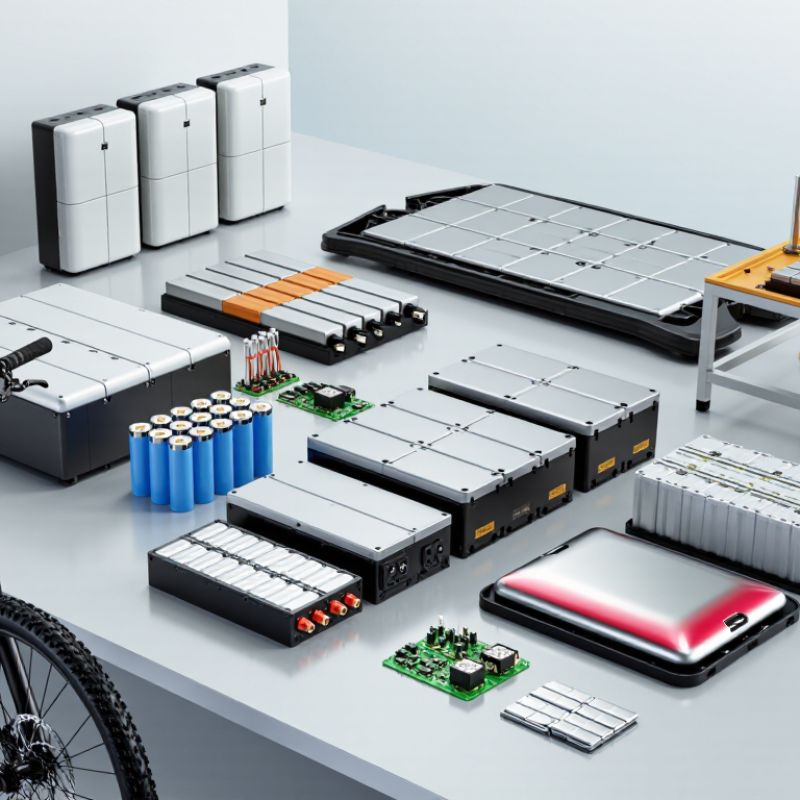
Battery-pack types are best understood through three separate choices: chemistry, cell format, and intended application. Chemistry shapes energy density, cost, service life, and thermal behavior. Lithium iron phosphate cells often favor durability and stable operation, while nickel-rich lithium-ion chemistries can store more energy in limited space. Lead-acid remains practical for some backup systems, though its weight can be a drawback. Sodium-ion is developing, but availability and performance vary.
Cell format affects how a pack is assembled and cooled. Cylindrical cells are sturdy and relatively easy to replace in some designs. Prismatic cells use space efficiently, while pouch cells are light and flexible but need firm mechanical support. Small details matter: a pouch cell swelling against a tight enclosure can create problems. Not every design handles heat equally well.
Application should guide the final choice. A home storage pack may prioritize cycle life and predictable operation; a portable tool may need high power in a compact enclosure. Electric mobility adds vibration, rapid charging, and temperature swings to the design brief. Check usable capacity, continuous and peak current, operating temperature, protection circuitry, and warranty terms—not just the headline capacity. In real projects, the “best” chemistry can change with climate and duty cycle. That part is easy to underestimate. A qualified integrator can verify that cells, controls, enclosure, and cooling work as one system.
Compare LFP and NMC Packs Against BNEF’s 2024 Average of $115/kWh
BNEF’s 2024 average battery-pack price of $115 per kilowatt-hour is a useful reference, not a guaranteed quote for every pack. It combines market data across applications and chemistries. Actual prices shift with cell design, pack structure, order size, and region. A buyer comparing LFP and NMC should check what the quoted price includes, such as cooling hardware and battery controls.
LFP packs typically trade some energy density for strong cycle life and thermal stability. That can suit vehicles or storage systems with room for a larger, heavier pack. NMC packs often store more energy in less space, which matters when weight or range is tight. Neither chemistry wins every time. The less obvious detail is how daily use affects lifetime cost: frequent cycling can make durability more important than a low purchase price.
Use $115/kWh as a yardstick, then request like-for-like quotes. Compare usable energy, warranty terms, expected cycle life, and performance in cold weather. Ask whether the price reflects cells alone or the complete pack. Small omissions matter. A pack may look cheaper on paper, yet need extra thermal equipment or deliver less usable capacity. Market averages help frame a decision, but they cannot replace application-specific testing—and that distinction is easy to overlook.
Assess Sodium-Ion Packs Using Reported Cell Energy-Density Ranges
Sodium-ion packs deserve attention in 2026, but cell energy density is the key trade-off. The International Energy Agency’s Global Critical Minerals Outlook 2024 reports a broad range of roughly 75–160 Wh/kg for sodium-ion cells, compared with about 150–300 Wh/kg for lithium-ion cells. These are cell-level figures, not finished-pack performance. Packaging, cooling, and control hardware reduce the energy available per kilogram.
That gap can matter in a vehicle: a heavier pack may mean less range or less cargo capacity. For stationary storage, weight may matter less than cost, supply diversity, and performance in cold conditions. The IEA’s Batteries and Secure Energy Transitions report also frames sodium-ion as a developing alternative, not a universal replacement. Check whether a quoted figure describes a prototype, a production cell, or a complete pack. The comparison is imperfect. Test conditions and cell formats vary, so range figures are not directly interchangeable. Buyers should ask for independently verified cell data, cycle-life results, and pack-level usable energy. Numbers alone mislead.
What Are the Best Battery Pack Types in 2026?
Reported cell energy-density ranges by battery chemistry
Sodium-ion cells are commonly reported around 100–160 Wh/kg. This is generally below many LFP and NMC cell ranges, though energy density alone does not determine which pack is best. Values are indicative cell-level ranges; pack-level density is lower and varies with design.
Compare Lithium-Ion and Lead-Acid Packs: DOE Lists 90–250 vs. 30–50 Wh/kg
Lithium-ion and lead-acid packs differ sharply in energy density. The DOE figures cited here put lithium-ion at 90–250 Wh/kg, compared with 30–50 Wh/kg for lead-acid. In practical terms, a lighter lithium-ion pack may store more energy for its weight. That matters in portable equipment, where every kilogram affects carrying and installation.
Still, these ranges do not tell the whole story. Actual performance depends on pack design, operating temperature, discharge rate, and usable capacity. A lead-acid pack may suit a stationary backup system where weight matters less and familiar maintenance practices are available. Lithium-ion can reduce bulk, but upfront cost, charging needs, and replacement planning deserve attention. The comparison is helpful, not a complete buying guide. I would not choose on Wh/kg alone.
Tips: Compare usable energy, not just rated capacity. Check the full pack weight and the expected operating conditions. Ask how performance changes with temperature. Small detail, big difference. Leave room in your estimate for aging and real-world losses; they are easy to overlook.
Evaluate Solid-State Packs by Commercial Readiness and Verified Performance Data
In 2026, solid-state battery packs deserve attention, but headlines are not proof of readiness. The term covers different chemistries and designs, so compare specific, independently tested packs rather than broad promises. Ask whether published energy-density figures describe cells or complete packs; packaging, cooling, and controls add weight and volume. Small gains on paper may shrink in a vehicle.
Look for verified results across repeated charge cycles, realistic temperatures, and fast-charging conditions. Safety evidence should include clear test methods, not just claims of reduced flammability. Useful data also shows performance variation between samples. One impressive prototype is not enough. Commercial readiness depends on consistent production, reliable materials supply, quality control, and serviceable pack design. These details are less exciting, but they affect what buyers actually receive.
Be cautious when results come only from laboratory cells or company-selected demonstrations. Independent testing is valuable, though even that may not match everyday use. A pack that performs well under one test can disappoint in cold weather or after long use. Solid-state technology may suit some applications sooner than others; broad availability should be judged by verified output, durability, and manufacturing evidence, not projected launch dates. We should leave room for doubt.