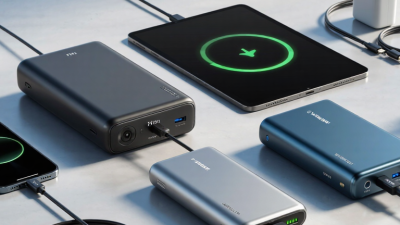
China Top 10 Battery Pack Suppliers for Global Buyers
A dependable battery pack is more than cells in a metal case. It combines modules, a battery management system, thermal controls, wiring, and safety features. For global buyers, the supplier choice can shape product performance, delivery schedules, and after-sales support. Small details matter: connector quality, cooling design, and clear test records can affect how a pack performs in the field.
The International Energy Agency’s Global EV Outlook 2024 reports that battery demand for electric cars exceeded 750 GWh in 2023, rising by around 40% from 2022. That growth brings more suppliers into view, but scale alone does not prove quality. IEA Executive Director Fatih Birol has said, “The age of electric cars is not coming, it is already here.” His observation captures the market’s momentum; buyers still need to assess each supplier’s actual capabilities.
This guide examines ten battery pack suppliers for international purchasing teams. It considers product range, manufacturing experience, customization, certifications, and communication—not just headline capacity. A supplier may look strong on paper. The factory audit may tell a different story. Rankings can also miss regional service gaps and changing lead times, so treat them as a starting point, not a final verdict. Verify specifications, sample-test results, warranty terms, and support arrangements before committing. This is not always easy. That is precisely why careful comparison matters.

China’s Battery Pack Industry and Supply Chain
China’s battery pack industry is built on a closely linked supply chain: mineral processing, electrode materials, cell production, pack assembly, and testing. The Ministry of Industry and Information Technology reported that China’s lithium-ion battery output exceeded 1.17 trillion watt-hours in 2024, up 24% year over year. Scale matters. For global buyers, this can mean access to high-volume production and nearby suppliers for cells, thermal components, wiring, and battery management systems.
The International Energy Agency’s Global EV Outlook 2025 estimates that China produced around 80% of the world’s battery cells in 2024. This concentration supports efficient sourcing, but it also makes supplier due diligence important. A finished pack depends on more than cell capacity: buyers should examine traceability, test records, quality controls, and how suppliers handle design changes. Ask for evidence, not just a specification sheet.
The supply chain is not equally strong at every step. Pack integration, communication protocols, and validation can vary between factories, even when headline figures look similar. A practical review might compare sample packs, inspect production processes, and check whether test results match the intended operating conditions. Small details matter. A connector layout or cooling path can affect installation and serviceability. I would not treat China’s manufacturing scale as a substitute for checking each supplier’s actual process.
How to Evaluate Battery Pack Suppliers in China
China Top 10 Battery Pack Suppliers for Global Buyers
How to Evaluate Battery Pack Suppliers in China
China accounted for about 85% of global battery cell manufacturing capacity in 2023, according to the IEA’s Global EV Outlook 2024. That scale gives buyers many options, but a large factory does not automatically mean a reliable pack. Check whether the supplier can show cell traceability, production quality records, and test results for the exact pack configuration you plan to purchase.
Price needs context. BloombergNEF reported an average lithium-ion battery pack price of $115 per kilowatt-hour in 2024. Use this as a market reference, not a target every supplier must meet. Compare quotations alongside cycle-life conditions, usable capacity, thermal management, and warranty terms. Ask how performance changes in your expected temperature range. A neat presentation is reassuring. It is not proof.
Tips: Request a sample pack and review its test report against your intended use. Ask to see how the supplier handles a failed cell or a batch variation. Confirm that quoted specifications appear in the final contract. Paperwork can be tidy; production can still vary. That detail deserves another check.
Profiles of 10 Leading Chinese Battery Pack Suppliers
Profiles of ten leading Chinese battery pack suppliers reveal a market shaped by scale, engineering depth, and application-specific design. The International Energy Agency’s Global EV Outlook 2024 estimates that electric-vehicle battery demand reached about 750 GWh in 2023, roughly 40% above 2022. China represented nearly 60% of that demand. These figures explain why supplier comparisons should examine more than factory size.
The profiles assess pack architecture, battery management systems, thermal control, production quality, and technical support. Some suppliers focus on passenger vehicles, where compact layouts and fast charging matter. Others serve commercial fleets, prioritizing durability, service access, and predictable operating costs. Details matter. A well-documented validation process can be more useful than an impressive capacity figure.
For buyers, the practical questions are specific: How does the pack manage heat during repeated charging? Can the supplier provide traceable test records and stable delivery schedules? What happens when a component changes? Public reports describe market growth, but rarely verify an individual supplier’s performance. Buyers should confirm specifications, certifications, and warranty terms directly. Even a careful profile has limits; supplier data can change, and comparisons may not be perfectly like-for-like.
Comparing Supplier Capabilities, Certifications, and Applications
Global buyers comparing battery-pack suppliers should look beyond quoted capacity and unit price. A capable supplier can explain cell selection, pack architecture, battery management systems, thermal controls, and end-of-line testing. Ask for test records tied to the proposed configuration, not a generic product sheet. Small differences matter.
Certifications should match the intended market and shipment route. Depending on the product and destination, buyers may need evidence such as UN 38.3 test summaries, IEC test reports, or applicable conformity documents. Verify the certificate holder, model number, revision, and validity against issuing records where available. A certificate does not prove that every custom pack is covered. This is often missed.
Application fit also changes supplier priorities. E-bikes need vibration resistance, secure enclosures, and predictable service support. Energy storage packs need thermal monitoring, stable communications, and clear installation limits. Industrial equipment may prioritize peak-current delivery and replaceable modules. Ask about sample validation, traceability, warranty exclusions, and failure-analysis timelines. A neat brochure helps, but field data is better. Yet data can be thin. Compare suppliers using the same load profile, ambient temperature, and duty cycle, then document remaining assumptions.
Key Sourcing Considerations for Global Buyers
For global buyers, supplier selection should begin with application fit, not headline capacity. The IEA’s Global EV Outlook 2024 reports that electric-car battery demand exceeded 750 GWh in 2023, rising about 40% year on year. At this scale, traceable cell sourcing, stable production yields, and documented quality controls matter. Ask for cell-level test records, pack validation results, and clear failure-isolation procedures. Small details matter. Check enclosure seals, connector access, thermal pathways, and whether technicians can replace a module without dismantling the entire pack. Request verified production figures, not only stated factory capacity.
Price comparisons need care. BloombergNEF’s 2024 Battery Price Survey reported a volume-weighted average lithium-ion pack price of $115 per kWh, down 20% from 2023. This is a market benchmark, not a quote for every chemistry, region, or duty cycle. Compare expected lifetime costs, including warranty limits, test conditions, spare-part availability, shipping protection, and software support. Ask suppliers to specify usable energy at defined temperatures and discharge rates. Get it in writing. I would also have sample data reviewed independently; one polished factory visit may not reveal process variation. No checklist removes uncertainty, and buyers can still overvalue a low bid.