China Top 10 Battery Solutions for Global Buyers
Battery decisions now shape project cost, uptime, and the pace of electrification. For global buyers, the term “battery solutions” covers far more than cells: it includes chemistry, battery management systems, thermal control, safety features, warranties, and after-sales support. A low purchase price can look attractive. Yet a poorly matched system may bring higher operating costs or shorten service life.
The International Energy Agency’s Batteries and Secure Energy Transitions report, published in 2024, estimates that global energy storage capacity must rise sixfold by 2030 in its net-zero scenario, reaching 1,500 gigawatts. That figure includes a major role for battery storage. The report also highlights the need for stronger supply chains, grid flexibility, and responsible battery use. IEA Executive Director Fatih Birol has described batteries as “a key technology for clean energy transitions.” The message is clear: performance matters, but so do reliability and fit.
This guide compares ten battery solution providers and product approaches for international buyers. It considers application, chemistry, capacity, safety documentation, service coverage, and scalability. A containerized system beside a factory has different needs from a compact battery pack for mobile equipment. Fit matters. Rankings can simplify a complex market, but they cannot replace project-specific engineering or supplier checks. Some published specifications also leave questions unanswered. Buyers should verify test conditions, warranty exclusions, and local service arrangements before committing. That practical caution belongs in any serious comparison.
Battery Solution Categories and Their Global Applications
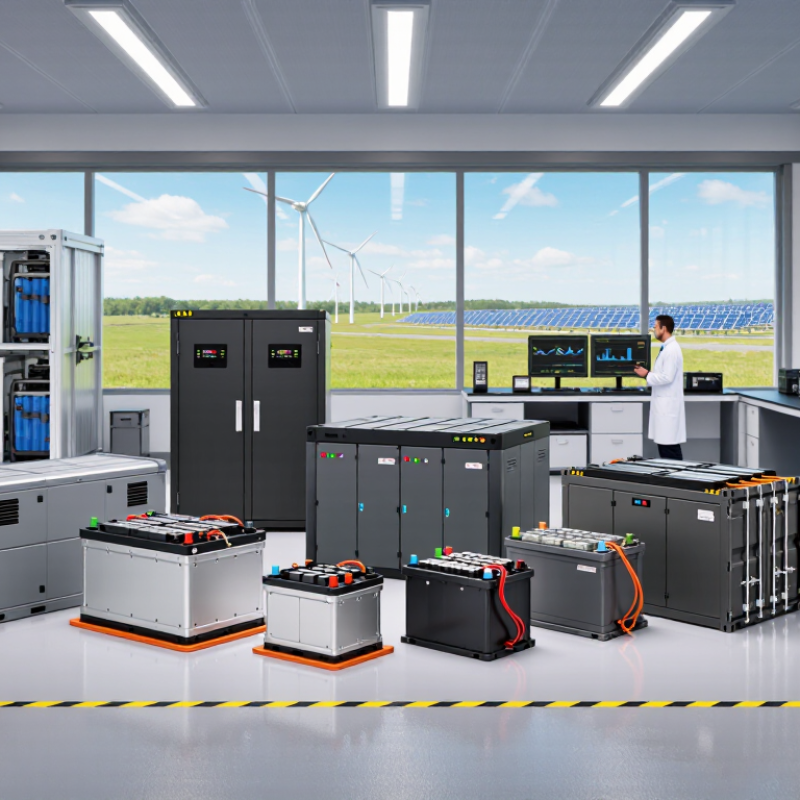
Battery solutions serve different jobs, climates, and operating schedules. Lithium iron phosphate systems suit many commercial sites and home storage projects because they offer long cycle life and stable operation. Nickel-rich lithium-ion packs prioritize energy density, making them useful in electric vehicles and space-constrained equipment. Lead-acid batteries remain practical for some backup systems, while flow batteries can support longer-duration stationary storage. Fit matters.
Applications are expanding quickly. The International Energy Agency’s Global EV Outlook 2024 reports that electric-car battery demand exceeded 750 GWh in 2023, up about 40% from 2022. The IEA’s Batteries and Secure Energy Transitions report says global energy storage capacity must grow sixfold by 2030 in its net-zero scenario, with batteries providing most of that increase. For a solar-powered warehouse, that can mean storing midday electricity for evening shifts. For remote telecom sites, reliable backup matters more than compact size. Heat changes everything. Temperature, charging patterns, service access, and expected backup hours should shape the design; a low purchase price alone can mislead.
Tips: Check usable capacity, cycle-life conditions, and operating-temperature limits in the technical datasheet. Ask how performance changes in local weather. One-size-fits-all sizing still happens—and it deserves a second look.
How China’s Top 10 Battery Solutions Are Selected
A credible “top 10” selection begins with a clear scoring method, not popularity. The International Energy Agency’s Global EV Outlook 2024 reports that electric-car battery demand exceeded 750 GWh in 2023, rising about 40% year on year. That matters. Buyers need solutions matched to actual use, not a single headline capacity figure.
Compare usable energy, cycle-life test conditions, charging performance, thermal controls, warranty coverage, and delivery capability. Ask for test results at stated temperatures and charge rates; figures without conditions are hard to compare. Check whether the supplier explains cell traceability and quality controls. Evidence beats slogans. A low purchase price may look attractive, but replacement costs and downtime can change the calculation.
A fair ranking should publish its criteria and explain how each factor is weighted. For example, a stationary storage project may value cycle life more than fast charging, while a fleet operator may reverse those priorities. IEA data describes a fast-growing market, not a universal winner. Even a careful scorecard can miss local service delays or real-world degradation. That is a limitation worth stating, rather than hiding.
China’s Top 10 Battery Solutions for International Buyers
China Top 10 Battery Solutions for Global Buyers
China’s Top 10 Battery Solutions for International Buyers
International buyers can compare ten practical options: lithium iron phosphate and nickel-rich cells; sodium-ion cells; cylindrical, prismatic, and pouch formats; custom battery packs; packs with integrated battery management systems; residential storage; and commercial or grid-scale storage. These are not interchangeable. Chemistry affects energy density, cost, and thermal behavior, while format changes packaging and servicing needs. Ask suppliers for test conditions, cycle-life definitions, and traceable cell documentation—not just a headline specification.
The International Energy Agency’s Global EV Outlook 2024 reports that electric-vehicle battery demand exceeded 750 GWh in 2023, about 40% above 2022. Its Global Supply Chains of EV Batteries report found that China held roughly 75% of global battery-cell manufacturing capacity in 2021. Those figures show scale, not a guarantee of fit. Details matter. Buyers should check sample performance, production consistency, warranty terms, and support across shipping and installation.
A neat spreadsheet can still miss real operating conditions. A cold warehouse, humid coastal site, or limited service network may change the right choice. Request independent test reports and clarify who handles failures. Sodium-ion may suit some stationary uses, but availability and performance vary. No single solution wins everywhere.
How Global Buyers Can Compare Suppliers and Purchase Safely
Global buyers comparing the top ten battery solutions should begin with the application, not the sales brochure. A warehouse forklift, a home energy system, and a compact medical device place different demands on capacity, cycle life, temperature range, and charging speed. Write down the operating conditions before requesting quotations. Include daily use, peak load, installation space, and expected service life. Small details matter.
Ask each supplier for a current datasheet, traceable test reports, warranty terms, and a clear explanation of how performance was measured. Check that documents match the exact model offered; similar product names can hide different cell configurations. Where possible, assess production controls through an independent audit or a live factory review. Request a sample and test it under realistic conditions. One sample is not proof of consistent production, though. That part is easy to overlook.
Compare the full delivered cost, including packaging, freight, inspection, and after-sales support—not just the unit price. Before paying, confirm payment milestones, delivery dates, acceptance criteria, and remedies for defects in a written contract. Verify the supplier’s business details and speak with recent customers, ideally in a similar market. Use payment channels that provide documented records. If a supplier rushes you or avoids basic questions, pause. I have seen buyers focus so heavily on price that they missed vague warranty language; even careful buyers can miss something.