China has become a central force in the global automotive battery industry. Its suppliers serve electric cars, commercial vehicles, hybrids, and energy storage projects. This guide examines ten leading companies shaping that market.
The list considers production scale, battery chemistry, research strength, safety records, customer relationships, and international reach. It also reviews lithium iron phosphate and nickel manganese cobalt technologies. Cell performance matters, but so do thermal control, charging stability, warranty support, and recycling systems. Real-world driving exposes weaknesses that laboratory figures may hide.
Several suppliers operate enormous factories with automated assembly lines and strict quality checks. Others compete through specialized designs, lower costs, or strong regional partnerships. Their products may appear inside popular electric vehicles across China and overseas markets. However, market rankings can change quickly. A company’s shipment volume does not always prove superior reliability.
Readers should compare independent testing, vehicle recalls, certification records, and manufacturer disclosures. Public information is sometimes incomplete, especially when companies report results differently. That limitation deserves attention. This article therefore presents a practical comparison rather than an absolute verdict.
The selected manufacturers include established battery groups and fast-growing challengers. Each profile highlights its background, core technology, major customers, and competitive position. The discussion also considers supply-chain resilience, mineral sourcing, environmental responsibility, and global expansion. These factors influence long-term value more than impressive headlines alone.
Choosing automotive batteries is not simply a price decision. Safety, service life, charging behavior, and responsible production all matter. A careful review can help automakers, investors, and informed buyers understand China’s rapidly changing battery landscape. Some conclusions may require revision as technology, policies, and market demand continue to evolve.
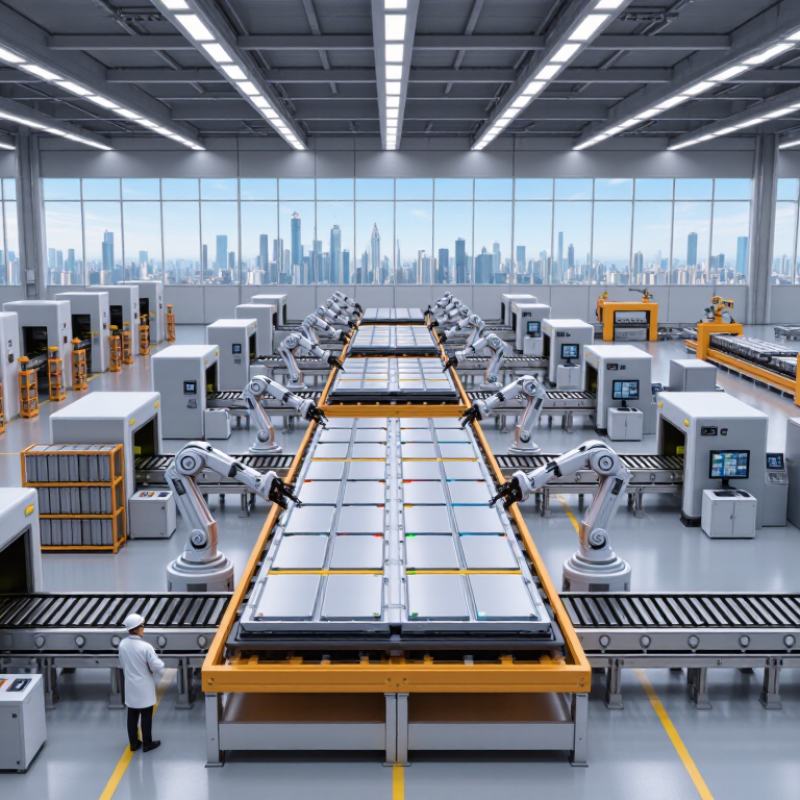
China’s automotive battery industry is not a simple list of ten companies. It is a layered manufacturing network. Large cell producers supply standardized units, while pack integrators arrange cells, cooling plates, sensors, and protective structures. Vehicle manufacturers may purchase complete packs or develop part of the system internally.
The strongest suppliers usually control several stages. They secure battery materials, operate large cell factories, and test packs under heat, vibration, and repeated charging. Regional production clusters support this structure with electrode plants, equipment makers, software teams, and logistics providers. Some suppliers focus on passenger vehicles. Others serve buses, commercial trucks, or energy storage projects, which changes their production priorities.
Supplier selection also depends on more than capacity. Buyers examine defect rates, traceability records, thermal-management design, delivery stability, and compliance documentation. Factory audits often check clean-room conditions, welding consistency, and how damaged cells are isolated. A low quoted price can hide costs in warranty work or slower engineering support. That point is often underestimated.
The industry remains highly competitive, but it is not perfectly transparent. Public rankings may measure shipment volume, production capacity, or revenue, and these figures are not interchangeable. A supplier with fewer shipments may provide stronger customization for a specific vehicle platform. Smaller engineering firms can also influence pack safety without appearing in headline rankings. Market observers should verify current data, because factory expansions and procurement agreements can change the top ten quickly.
China Top 10 Automotive Battery Suppliers?
Ranking China’s leading automotive battery suppliers requires more than comparing shipment volume. A reliable assessment should examine verified production capacity, battery chemistry, energy density, cycle life, and thermal safety. Independent laboratory results matter. So do factory audits. A supplier with large output may still deserve a lower position if quality varies between production lines.
Technical capability should receive serious weight. Reviewers can examine research patents, cell-to-pack design, charging performance, and cold-weather operation. Real testing is essential. A battery tested at 25°C may perform differently on a winter road. Warranty data, failure rates, recall records, and traceability also reveal operational maturity. These details are often less attractive than headline capacity, but they are more useful to vehicle manufacturers.
Commercial reliability forms another major criterion. Assess delivery consistency, raw-material risk management, financial transparency, after-sales support, and recycling arrangements. Customer diversity can indicate resilience, although it does not guarantee quality. Public filings, certification documents, customer feedback, and long-term shipment evidence should support each score. No ranking is flawless. Some suppliers disclose limited information, so estimates may require caution. I would also separate proven performance from future promises, because impressive prototypes can remain unavailable in normal production.
A transparent, non-brand-based evaluation framework for comparing automotive battery suppliers in China
The table below uses measurable procurement and engineering criteria. Each supplier should be scored using the latest audited, customer-verified, or publicly documented data available for the same reporting period. Company names and brand information are intentionally excluded.
| Rank | Evaluation Criterion | Weight | Recommended Measurement | Evidence or Benchmark |
|---|---|---|---|---|
| 1 | Automotive Battery Shipment Scale | 20% | Annual automotive battery shipments measured in GWh | Verified shipment data, customer delivery records, or recognized industry databases; passenger and commercial vehicle volumes should be separated where possible. |
| 2 | Manufacturing Capacity and Utilization | 15% | Operational capacity in GWh and average utilization rate | Use operating plants rather than announced projects. Capacity utilization should be calculated as actual output divided by installed production capacity. |
| 3 | Product Safety and Quality | 15% | Warranty claims, recall history, field failure rate, and quality-system certification | Review ISO 9001, IATF 16949, UN 38.3, applicable GB standards, customer audit results, and publicly disclosed safety events. |
| 4 | Energy Density and Technical Performance | 10% | Cell-level and pack-level gravimetric energy density, cycle life, and fast-charging capability | Compare like-for-like chemistry and format under identical test conditions; do not compare a cell specification directly with a complete-pack specification. |
| 5 | Cost Competitiveness | 10% | Battery cost per kWh, total cost of ownership, and price stability | Use comparable cell or pack quotations, contract terms, commodity-index adjustments, warranty provisions, and logistics costs. |
| 6 | Technology Portfolio | 8% | Availability of LFP, high-nickel, sodium-ion, solid-state, and other application-specific solutions | Award points only for technologies in validated production, customer sampling, or documented vehicle deployment, not for laboratory concepts alone. |
| 7 | Research and Development Capability | 7% | R&D expenditure, engineering personnel, patents, testing facilities, and new-product launch record | Use audited financial statements, patent databases, technical publications, and independently verifiable development facilities. |
| 8 | Supply-Chain Resilience | 6% | Raw-material sourcing, supplier diversification, geographic footprint, and inventory continuity | Assess exposure to lithium, nickel, cobalt, graphite, separators, and other critical inputs, together with dual-sourcing and contingency plans. |
| 9 | Environmental and Circular-Economy Performance | 5% | Carbon intensity, renewable-energy use, water management, recycling, and end-of-life recovery | Prefer third-party verified carbon accounting, environmental-management certification, recycling capacity, and traceable material-recovery data. |
| 10 | Global Service and OEM Support | 4% | Overseas plants, technical-service coverage, spare-parts support, warranty response, and localization capability | Evaluate service response time, local engineering teams, regional warehouses, overseas production, and documented automotive-program experience. |
| Total Ranking Weight | 100% | Recommended scoring scale: 0–100 points for each criterion | ||
China’s leading automotive battery suppliers show different strengths rather than one identical formula. One high-volume producer focuses on large prismatic cells, automated assembly, and strict production traceability. Another specializes in lithium iron phosphate chemistry, offering stable thermal behavior for family vehicles and buses. A third supplier develops nickel-rich cells for longer driving ranges, although cooling demands remain significant.
A pouch-cell specialist targets lightweight vehicle platforms and works closely with automakers during pack integration. A cylindrical-cell supplier emphasizes standardized formats, robotic welding, and faster manufacturing changes. Another concentrates on commercial vehicles, where durability, charging cycles, and low-temperature performance matter more than maximum range. A battery-swapping supplier designs modular packs, reinforced connectors, and service-friendly housing.
Practical testing matters here.
A newer supplier combines cell production with battery-management software, using real-time voltage and temperature monitoring. Another builds recycling capacity, recovering valuable materials while improving supply security. The tenth profile belongs to an engineering-focused manufacturer that adapts pack dimensions for different vehicle platforms and regional climates.
Public technical disclosures, factory audits, and independent safety testing provide useful evidence, but comparisons are not always simple. Production scale can hide differences in warranty support, field reliability, or repair access. Some suppliers publish impressive laboratory results, yet real-road performance may vary with weather, driving habits, and charging infrastructure. Buyers should examine verified cycle data, recall records, thermal-protection design, and after-sales response before judging leadership.
China’s Top 10 Automotive Battery Suppliers
China’s leading automotive battery suppliers compete through chemistry, scale, and engineering discipline. Lithium iron phosphate cells remain popular because they offer strong thermal stability, long cycle life, and lower material costs. Nickel-based cells provide higher energy density for longer-range vehicles, but they demand stricter cooling and quality controls. Sodium-ion designs are emerging for smaller vehicles and cold-weather applications. They are promising, though their production maturity still needs careful review.
Production capacity often appears in gigawatt-hours, but announced capacity is not always operating capacity. Analysts should check factory utilization, automation levels, yield rates, and local supply chains. Cell-to-pack integration can reduce unused space and improve vehicle range. Larger cylindrical cells may simplify assembly, while pouch cells can support flexible vehicle platforms. Each choice creates trade-offs. Higher capacity does not automatically mean better reliability.
Market applications now extend beyond private passenger cars. Commercial vans need durable packs for repeated daily charging. Electric buses require stable thermal performance and predictable maintenance. Heavy trucks demand high power, robust cooling, and rapid energy replenishment. Battery suppliers also support fleet monitoring through software and remote diagnostics. Field experience matters here. Laboratory results can look excellent, yet real roads bring heat, vibration, overloaded routes, and uneven charging habits. Public rankings also change quickly, so buyers should verify recent shipment data, warranty terms, safety testing, and recycling arrangements before making decisions.
China’s top automotive battery suppliers have expanded far beyond domestic production. Their cells now support vehicle programs across Asia, Europe, North America, and emerging markets. This reach comes from large-scale factories, established shipping networks, and regional service teams. Some suppliers also build plants near vehicle assembly centers, reducing transport time and improving coordination. Their experience with high-volume manufacturing often helps lower costs while maintaining consistent output.
Tips: Check factory capacity, export records, safety testing, and warranty support. Ask how suppliers manage temperature changes, software updates, and battery recycling. Cost matters, but it should not replace technical verification.
Their competitive advantage also comes from broad research capabilities. Suppliers invest in energy density, fast charging, thermal control, and pack integration. Different vehicle segments need different solutions. A city car may prioritize affordability, while a premium vehicle may require longer range and stronger cooling systems. Localized engineering can help adapt batteries to regional climates and regulations. Still, no supplier wins every project. Material prices change, policies evolve, and production expansion can create quality pressure. Buyers should review independent test data, not only factory presentations. Delivery promises may also look stronger on paper than in practice. Careful audits, sample testing, and transparent communication remain essential for reliable global partnerships.
China has maintained the world’s largest battery manufacturing base, supported by an integrated supply chain for cathode materials, anode materials, cells, and battery components. Its high production scale and established domestic electric-vehicle market strengthen cost competitiveness and international expansion.
Figures are approximate shares of global electric-vehicle battery cell manufacturing capacity, compiled from International Energy Agency analysis published in Global EV Outlook reports.