
Call Us For Your Battery Needs
800-400-4858
Where to Find China Top Battery Store Suppliers?
Finding reliable China battery store suppliers requires more than comparing prices on a marketplace. The right partner should provide stable cells, transparent specifications, responsive support, and documented quality controls. This matters whether you operate an online shop, a repair counter, or a regional distribution business.
“Battery technology is not a commodity; it is a system,” says Professor Yet-Ming Chiang, a leading battery researcher at MIT. His observation is useful for anyone building the battery store supply chain. A low-cost battery may look attractive, yet its chemistry, protection circuit, cycle life, packaging, and storage conditions can change the real business cost. Small details matter.
Look for manufacturers with traceable production records and clear testing procedures. Ask for sample units before signing a large order. Review capacity reports, safety documentation, warranty terms, and product consistency. Suppliers should also explain their handling of lithium batteries during storage and international shipping. Reliable factories usually answer specific questions without hiding behind vague marketing.
Factory experience helps.
However, supplier selection is never perfectly predictable. A polished website does not prove dependable production. Even a strong factory can experience delays, material changes, or communication problems. That is why independent inspections and gradual purchasing remain sensible choices. Buyers should compare several Chinese suppliers, visit facilities when practical, and keep written records of every technical promise.
The best China battery store supplier is not always the cheapest one. It is the partner that protects product quality, customer safety, and long-term reputation. That requires patience, evidence, and a willingness to reconsider early assumptions.
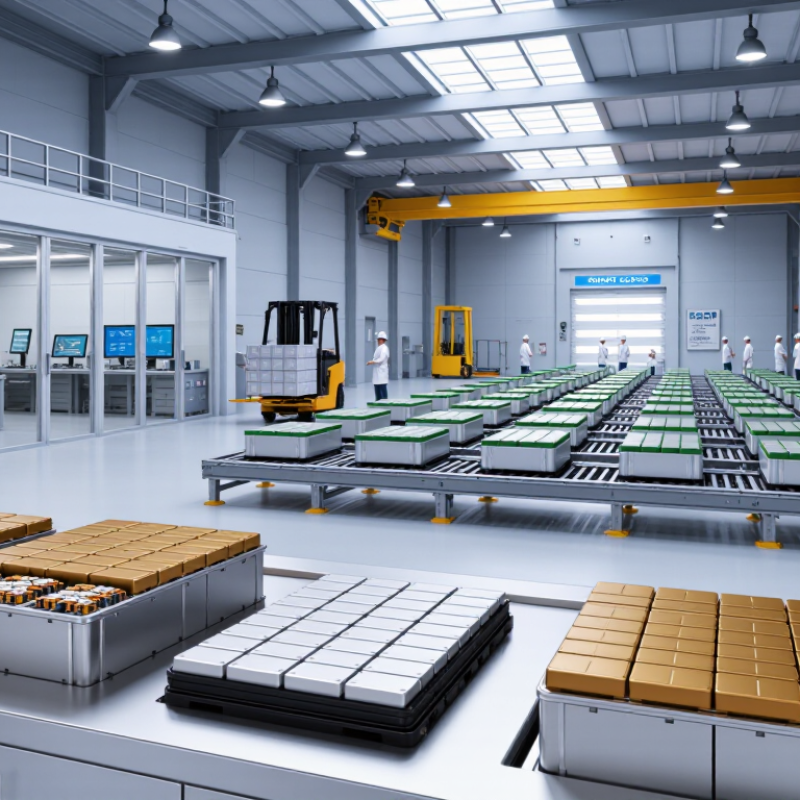
Define the Battery Type: EV, ESS, Portable, or Replacement Applications
Before searching for China’s top battery store suppliers, define the application clearly. EV batteries require high power, thermal control, and strict safety testing. Energy storage systems need long cycle life, stable discharge, and reliable monitoring. Portable batteries prioritize light weight, compact design, and fast charging. Replacement batteries must match voltage, dimensions, connectors, and protection circuits.
The numbers show why this decision matters. The International Energy Agency reported over 14 million electric car sales in 2023, representing about 18% of global car sales. Its Batteries and Secure Energy Transitions report also recorded around 42 GW of new battery storage capacity in 2023. These markets do not share identical cells or testing methods. A supplier experienced in portable packs may not understand grid storage requirements. That mistake can become expensive.
Tips: Ask suppliers for cycle-life curves, cell test records, UN 38.3 documentation, and real operating temperature ranges. Request a sample with your intended load. Check its weight, heat rise, charging time, and connector fit. Do not rely only on capacity labels. A 10,000 mAh label can hide different discharge conditions. Verify the usable energy instead. I have seen specifications look excellent on paper, yet performance weakened under cold conditions. Supplier reviews should include factory audits, traceability, warranty terms, and response times. The cheapest quote is rarely the complete cost.
| Battery Type | Typical Application | Common Chemistry | Typical Electrical Range | Key Product Requirements | Relevant Testing or Compliance Areas | Common China Sourcing Hubs | Supplier Questions to Ask |
|---|---|---|---|---|---|---|---|
| EV Traction Battery | Passenger electric vehicles, electric buses, commercial vehicles, electric motorcycles, and low-speed vehicles. | LFP NMC | Cell nominal voltage is commonly about 3.2 V for LFP and 3.6–3.7 V for NMC. Battery packs may range from approximately 48 V to more than 800 V, depending on vehicle architecture. | High energy density, high continuous discharge capability, liquid or air thermal management, impact protection, battery management system, cell balancing, and reliable enclosure design. | UN 38.3 transport testing, IEC 62660 cell testing, ISO 12405 road-vehicle battery-pack testing, electromagnetic compatibility, electrical safety, vibration, crush, overcharge, and thermal-abuse testing. Local market requirements must also be confirmed. | Guangdong, Jiangsu, Zhejiang, Anhui, and Hubei are major manufacturing areas for electric-vehicle batteries and related components. | Ask about cell traceability, pack-level test reports, thermal runaway protection, warranty terms, production capacity, sample validation, after-sales support, and integration with the vehicle control system. |
| ESS Battery | Residential energy storage, commercial and industrial storage, renewable-energy storage, microgrids, and peak-shaving systems. | LFP Lead-acid Flow battery | Residential systems commonly use 48 V or high-voltage modular architectures. Commercial and utility systems may use hundreds of volts to more than 1,000 V DC, depending on system design. | Long cycle life, high round-trip efficiency, modular expansion, thermal monitoring, fire protection, remote monitoring, inverter compatibility, and safe installation procedures. | UN 38.3, IEC 62619, IEC 63056, IEC 62477-1, IEC 62933 series, UL 1973 or UL 9540 where applicable, and local grid-connection and fire-safety requirements. | Guangdong, Jiangsu, Zhejiang, Anhui, Fujian, and Shanghai are important areas for energy-storage battery systems, power electronics, and industrial equipment. | Ask about usable capacity, depth of discharge, cycle-life test conditions, inverter communication protocols, environmental operating range, fire-safety design, installation guidance, and remote fault diagnosis. |
| Portable Power Battery | Portable power stations, camping equipment, emergency backup, outdoor work equipment, medical backup, and mobile electronic devices. | LFP NMC Lithium-ion polymer | Small products may use a single-cell or low-voltage multi-cell design. Portable power stations commonly provide approximately 12 V, 24 V, or 48 V battery systems, with AC, DC, and USB outputs. | Compact design, low weight, safe battery management, fast charging, multiple output ports, overload protection, temperature protection, display accuracy, and suitable ingress protection. | UN 38.3, IEC 62133-2, IEC 62368-1 for applicable electronic equipment, electromagnetic compatibility, charger safety, and regional requirements for transport and radio functions. | Guangdong, Zhejiang, Jiangsu, and Fujian have extensive supply chains for portable power products, chargers, inverters, connectors, and battery enclosures. | Ask about real usable watt-hours, continuous and peak output, charging time, battery-management functions, noise level, operating temperature, replacement policy, and packaging compliance. |
| Replacement Battery | Replacement packs for power tools, lawn equipment, mobility devices, scooters, alarm systems, consumer electronics, and industrial instruments. | Lithium-ion LFP Ni-MH Lead-acid | Voltage must match the original equipment. Common lithium-ion replacement ratings include 3.7 V, 7.4 V, 11.1 V, 14.8 V, 18 V, 24 V, and 36 V nominal configurations. | Exact dimensions, connector compatibility, polarity, protection circuit, discharge rating, mounting method, communication interface, and compatibility with the original charger and equipment. | UN 38.3 for lithium batteries, IEC 62133-2 where applicable, electrical safety testing, capacity verification, short-circuit protection, overcharge protection, and product-specific regulatory requirements. | Guangdong, Zhejiang, Jiangsu, and Shandong offer broad replacement-battery manufacturing and component supply chains for consumer and light-industrial applications. | Ask for the original battery specifications, dimensional drawings, connector photographs, protection-board details, actual capacity test results, minimum order quantity, and sample compatibility testing. |
| Lead-Acid Replacement | Backup power, telecommunications, security systems, access control, mobility equipment, automotive starting systems, and industrial control systems. | AGM GEL Flooded lead-acid | Common nominal blocks include 6 V and 12 V. Larger systems are assembled by connecting multiple blocks in series and parallel. | Correct terminal type, standby or deep-cycle design, low self-discharge, sealed construction where required, charging-voltage compatibility, vibration resistance, and maintenance requirements. | IEC 60896 series, IEC 61427 for renewable-energy applications where relevant, UN 2800 transport classification for certain wet non-spillable batteries, and applicable local transport rules. | Zhejiang, Jiangsu, Shandong, Henan, and Guangdong have established lead-acid battery manufacturing and recycling ecosystems. | Ask about rated capacity test conditions, design life, float-life data, terminal dimensions, electrolyte type, recycling arrangements, storage limits, and charging-system compatibility. |
Related Posts
-
China Top 10 Battery Suppliers for Global Buyers
-

How to Buy a Battery in 2026 for Global Buyers?
-
Why is Battery Supply Crucial for Sustainable Energy Solutions?
-

Top Battery Store in China for Global Buyers Seeking Quality?
-
Why Choosing the Right Battery Store is Essential for Your Device Longevity
-
10 Best Car Battery Stores for Reliable Power Solutions?